
S
The Good Signal
Saturday, September 12, 2026Daily Edition
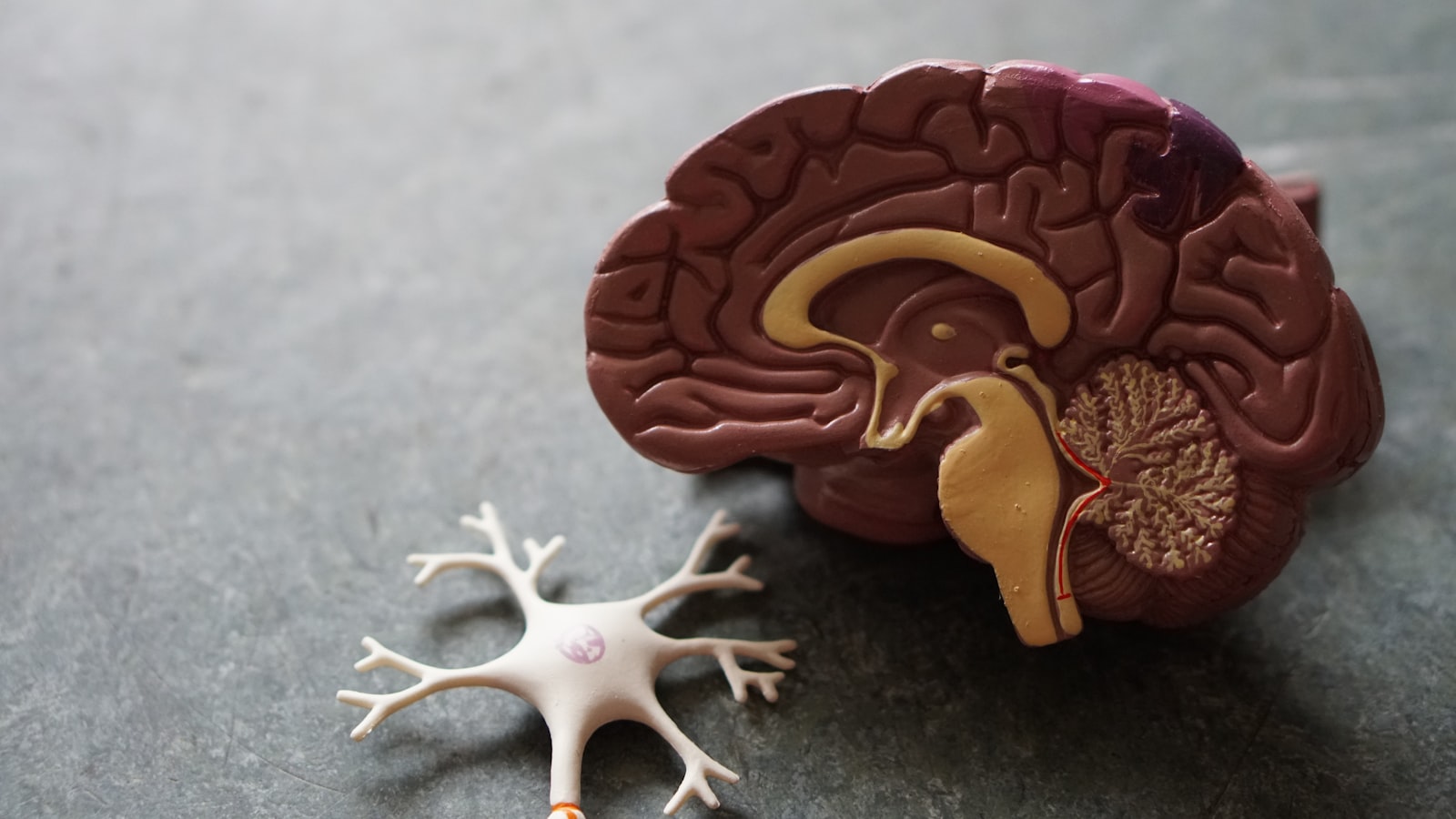
Rare cortical neurons can switch a mouse into sleep

Rare cortical neurons can switch a mouse into sleep

On 9 September 2026, Einstein and Allen Institute researchers showed in Nature that sparse Sst-Chodl cortical neurons (<1% of cortical GABAergic cells) induce sleep in mice; chemogenetic activation in n=14 mice raised SWS/REM and cut wake (P<0.001).

The Good SignalRead Story
Health

FDA clears a breast cancer pill for a resistance mutation

On 4 September 2026 the FDA granted accelerated approval to camizestrant (Etcamah, AstraZeneca) with a CDK4/6 inhibitor for adults with HR+/HER2− advanced breast cancer when an ESR1 mutation appears on an FDA-authorized test during AI + CDK4/6 therapy. In SERENA-6 (n=315), median PFS was 16 months vs 9.2 months (HR 0.44). OS is immature; confirmatory trials are required.

More Stories

Posts

Science & Technology

D-Wave’s new qubit gate keeps errors easy to catch

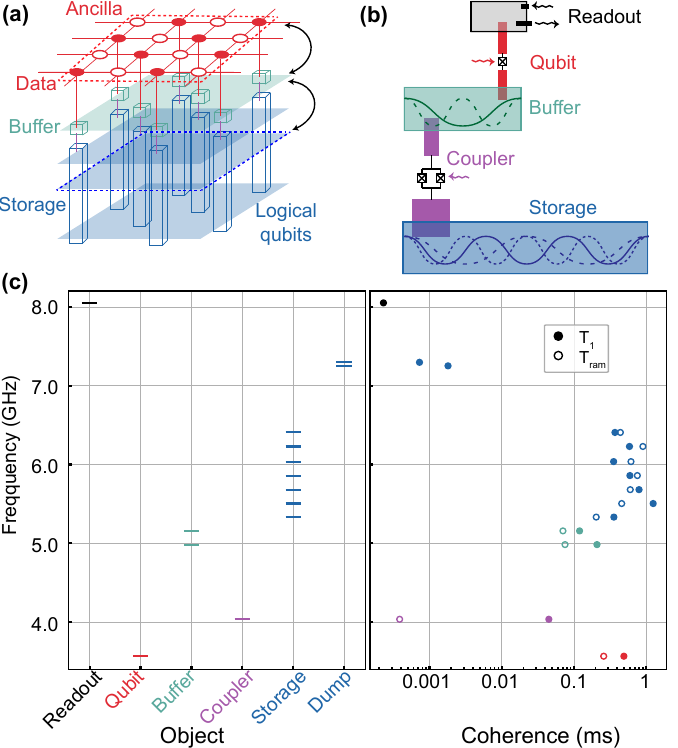
D-Wave’s dual-rail cavity team reports a ~500 ns Swap–Wait–Swap CZ gate in Nature (5 Aug 2026) with ~0.5% erasure per gate and residual Pauli errors below 0.1% after erasure detection. Stim surface-code sims give Λ≈27 versus ~14 for 0.1% depolarizing noise — simulation only, not a hardware logical qubit. The hierarchy holds; a scaled surface-code experiment is still ahead.

Science & Technology

FDA clears an Alzheimer’s blood test for ages 40+

On 20 August 2026 the FDA cleared C2N Diagnostics’ PrecivityAD2 blood test to help evaluate Alzheimer’s disease in adults aged 40 and older with cognitive symptoms. In a study of 1,142 people, a Positive result had 97.6% PPV and a Negative result 93.1% NPV against amyloid PET or CSF. The test is not a stand-alone diagnosis or a population screen.

Science & Technology

Old mice on semaglutide lived 12% longer

On 2 September 2026, a UC Berkeley–led team with Copenhagen and NIA co-authors reported in Nature that late-life semaglutide raised median lifespan in female C57BL/6 mice from 742 to 834 days — about 12%. Treated mice lived roughly 100 days longer on average and outpaced matched calorie restriction on memory and glucose control. This is a mouse study, not a human longevity trial, and it does not prove Ozempic or Wegovy extends human lifespan.

Science & Space

JWST finds four black-hole pairs in the infant universe

A Kavli IPMU / University of Tokyo–led team used JWST COSMOS-Web imaging and a pixel-by-pixel color method to find four dual “Little Red Dot” systems — likely rapidly growing black holes — about 12.5–12.8 billion years ago. Two pairs have matching-line spectroscopy at z = 5.822 and 5.464 (separations 1.64 and 7.36 kpc); clustering on kilo-parsec scales runs roughly 20–30× above an extrapolated JWST AGN power law. Published 31 August 2026 in PASJ. These are merger precursors, not confirmed black-hole mergers.

Science & Technology

IBM quantum computer finishes a hard task in 15 minutes

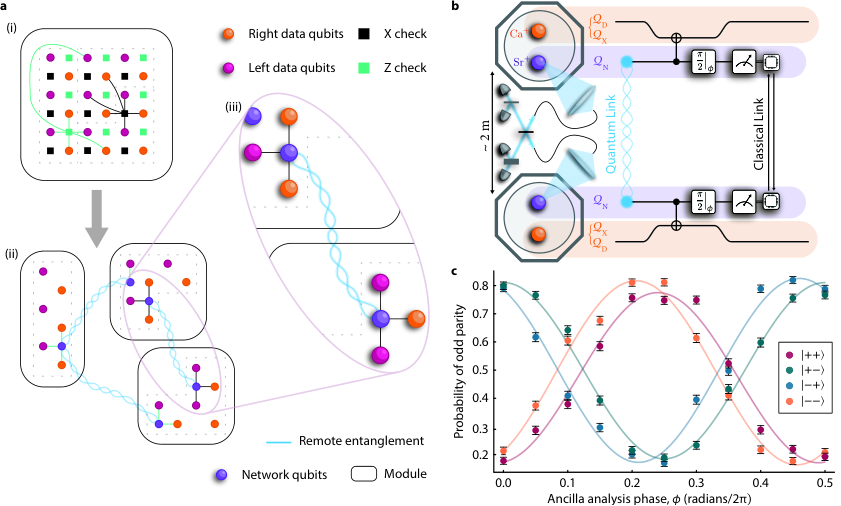
IBM Research and the University of Chicago reported a doped-Clifford sampling experiment on a superconducting processor. The arXiv paper (28 Jul 2026) runs a 64-qubit depth-73 circuit with 314 T gates on 76 physical qubits, posts a 95% lower bound F₂ ≥ 0.349, and collects 1,389 post-selected samples in about 14.5 minutes — roughly 10× lower effective gate error after syndrome post-selection. IBM’s newsroom frames a related “70 logical qubits / ~15 minutes” milestone; treat those as press figures, not the paper’s headline circuit.

Science & Technology

Scientists find a molecular switch that drives Alzheimer’s damage

An IBS–KAIST team reported in Nature on 26 August 2026 that ectopic ERBB4 in excitatory neurons drives Alzheimer’s-like cascade damage in mice. Selective Erbb4 deletion cut amyloid plaque area and number by about half and improved memory tests; analysis of 446 human AD brains linked excitatory-neuron ERBB4 to worse plaques and cognition. This is not a cure and not a human drug yet.