title: NASA and IBM just open-sourced an AI for the Moon slug: nasa-ibm-lunar-foundation-model-2026 summary: On 10 September 2026 NASA and IBM Research released an open-source Lunar Foundation Model trained mainly on ~17 years of Lunar Reconnaissance Orbiter data — roughly 2 million image tiles, including more than 1 million 1-meter camera frames and nearly 964,000 multispectral tiles. The model matched or beat baselines and showed a clear edge on polar ice–stability estimates; it is a mapping aid, not a landing autopilot. author: The Good Signal topic: Space image: /api/images/posts/lunar-mons-rumker-1789044810973-689721757.jpg publishedDate: 2026-09-10 locale: en sources:
- https://science.nasa.gov/science-research/artificial-intelligence-lunar-foundation-model/
- https://science.nasa.gov/artificial-intelligence-science
NASA and IBM Research released an open-source NASA-IBM Lunar Foundation Model on 10 September 2026, built so planetary scientists can dig through decades of Moon imagery without training a new algorithm from scratch for every map. The model was trained primarily on data from NASA’s Lunar Reconnaissance Orbiter (LRO) — roughly 17 years of coverage — plus supporting data from GRAIL, Lunar Prospector, and JAXA’s SELENE. Weights sit on Hugging Face; the full codebase and machine-learning-ready datasets are on GitHub, with integration into the open-source TerraTorch toolkit.
The training set is huge by planetary standards: roughly 2 million image tiles, comprising more than 1 million high-resolution Narrow Angle Camera frames at 1-meter resolution and nearly 964,000 multispectral images at 100-meter resolution. NASA notes that LRO’s data volume is larger than all other NASA planetary missions combined.
This is a foundation model for lunar science: a pre-trained system researchers can fine-tune with small labeled sets for crater mapping, irregular mare patches, and polar ice prospectivity. It is not a landing-site autopilot and not a claim of human-level lunar geology. In NASA’s framing, the win is turning petabytes of Moon data into something scientists can query faster.
Why it matters
Moon science is drowning in pixels. Manual crater catalogs and ice maps do not scale to the volume LRO already delivered — and Artemis-era planning needs faster answers about terrain, volcanism history, and where ice might be stable in permanently shadowed regions.
Foundation models flip the usual workflow. Instead of training a specialized network from scratch for every task, scientists start from a model that has already seen most of the Moon and then adapt it. Kevin Murphy, NASA’s chief science data officer and acting chief data and AI officer, framed the release as showing what becomes possible when AI meets NASA’s petabytes of scientific data: “collecting data is only part of the job… We also have to make data easier for scientists to explore and use.”
For anyone outside planetary science the stake is concrete. Future landing-region studies, polar resource maps, and impact-change detection all depend on reading the same LRO archive faster. An open model anyone can fine-tune lowers the barrier between “we have the pixels” and “we have a usable map.”
Key numbers
| Quantity | Value (NASA Science release, 10 Sep 2026) |
|---|---|
| Peg | 10 September 2026 open release |
| Primary training data | LRO (~17 years) |
| Image tiles | ~2 million |
| High-res camera tiles | >1 million at 1-meter resolution |
| Multispectral tiles | nearly 964,000 at 100-meter resolution |
| Other missions in training | NASA GRAIL, NASA Lunar Prospector, JAXA SELENE |
| Hosting | Hugging Face + GitHub + TerraTorch |
| Benchmark result | Matched or exceeded strong baselines; clear advantage on polar ice–stability estimation |
| NASA build teams | Marshall Impact AI, Goddard, Ames; science team assembled by NASA Headquarters |
What the model can do
Because the weights already encode broad lunar morphology, researchers can adapt them with limited labels. NASA highlights three example jobs:
- Crater mapping — every crater is an impact clock. Speeding identification and measurement frees scientists to interpret ages and solar-system history instead of clicking rims by hand.
- Irregular mare patches — unusual-looking volcanic features that look relatively young and challenge timelines for lunar cooling. Faster maps help test thermal-evolution stories.
- Polar ice prospectivity — estimating where ice is likely stable on and below the surface, especially in permanently shadowed regions cold enough to trap volatiles for up to billions of years.
On ice-stability estimation, NASA reports a clear advantage over a ConvNeXt baseline while preserving fine-scale prospectivity patterns against a reference map near Mons Mouton and other polar sites. On crater mapping and irregular-mare segmentation, performance was comparable to strong baselines.
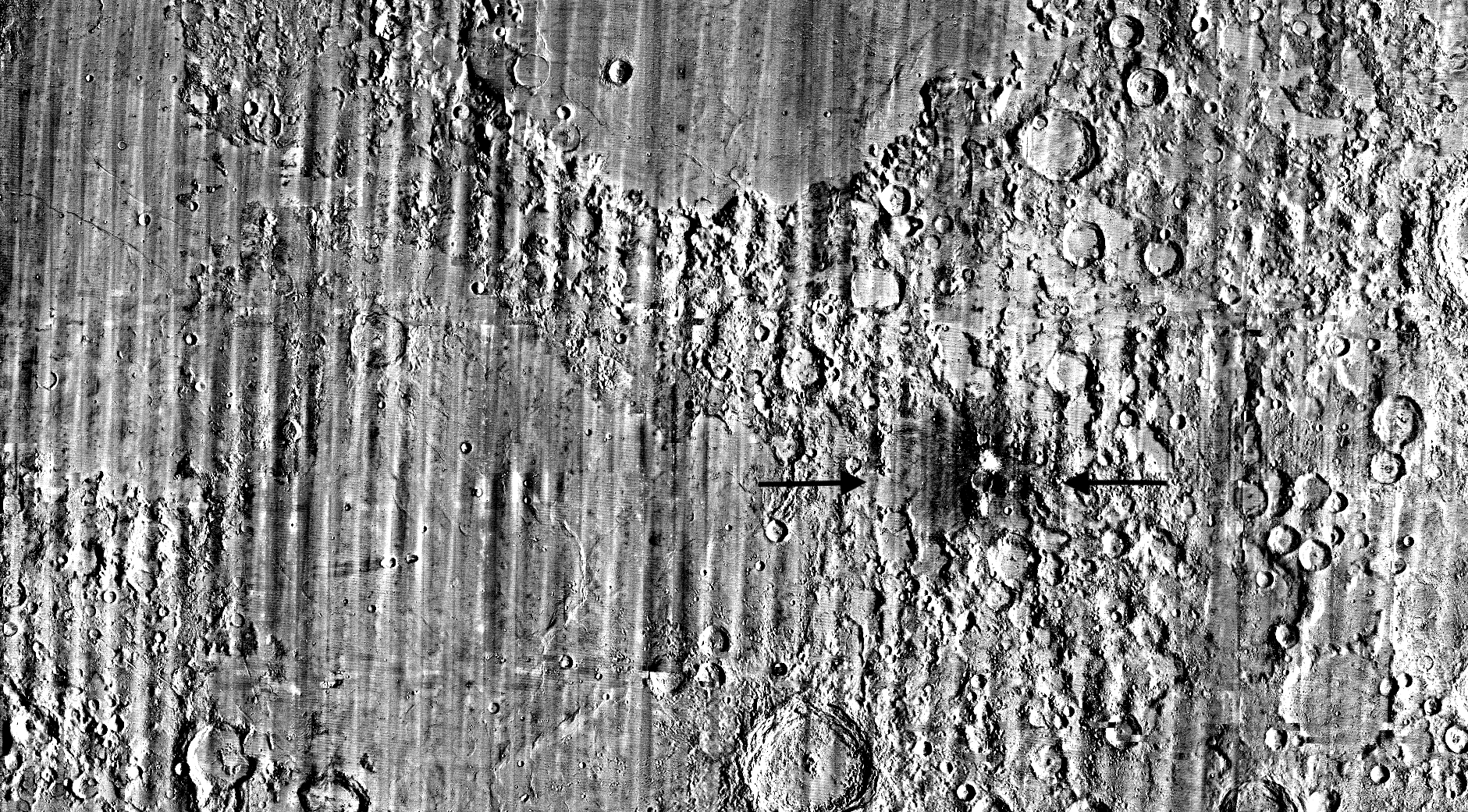
A separate demo showed the model detecting known craters and highlighting a new impact from a SpaceX rocket-body strike near Einstein crater. The post-impact frame was excluded from pre-training, so the test stresses fine-tuning for novel surface change — useful for automated natural-impact watches, with the caveat that lighting differences between orbits can hide smaller features.
Open release is the operational point. NASA and IBM are shipping weights, code, pre-training datasets, and benchmark collections so other groups can reproduce and extend the work — the same open-science pattern the agency has pushed with Prithvi for Earth observation. Permanently shadowed regions remain hard to interpret; a foundation model that already “speaks” LRO morphology can turn a small set of labeled polar patches into wider prospectivity layers — still estimates that need spectrometer and in-situ checks, but faster to draft. Irregular mare patches are rare enough that hand catalogs move slowly; accelerating candidate lists lets thermal-evolution debates run on larger samples.
Who built it
Inside NASA, Marshall’s Impact AI team worked with the Science Mission Directorate’s Planetary Science Division, Goddard, and Ames. The Headquarters-assembled science team drew experts from the Universities Space Research Association, the SETI Institute, the University of Maryland, Baltimore County, Howard University, and the centers above. The model sits in NASA’s broader “AI for science” push alongside the Prithvi Earth models and the Surya heliophysics model.
What this is not
- Not a landing autopilot. The release does not claim autonomous site selection or hazard avoidance for landers.
- Not human-level geology. Outputs still need scientist review; ice products are prospectivity estimates, not confirmed ore grades.
- Not Earth-observation Prithvi or solar Surya. It joins that NASA–IBM family but is trained on lunar, not Earth or heliophysics, data.
- Not a closed NASA-only tool. Open weights, code, datasets, and a companion paper on Hugging Face are part of the point.
What to watch
- Community fine-tunes — whether independent labs publish crater, IMP, or ice benchmarks that reproduce NASA’s edge claims.
- Polar resource maps — how prospectivity layers feed Artemis planning without being over-read as confirmed ice inventories.
- Change detection ops — whether impact-monitoring pipelines adopt the fine-tune recipe used near Einstein crater.
- TerraTorch adoption — whether the shared toolkit makes lunar foundation-model work as portable as Prithvi workflows for Earth.
The progress signal is an open lunar foundation model trained on roughly 2 million LRO-linked tiles, already competitive on mapping tasks and stronger on ice-stability estimates. The hedge stays where it belongs: this accelerates analysis; it does not replace fieldwork, spectrometers, or human geologic judgment.
Sources
- Rachel Wyatt, “NASA, IBM Launch AI Foundation Model for Lunar Science,” NASA Science, 10 September 2026. https://science.nasa.gov/science-research/artificial-intelligence-lunar-foundation-model/
- NASA AI for Science strategy overview: https://science.nasa.gov/artificial-intelligence-science
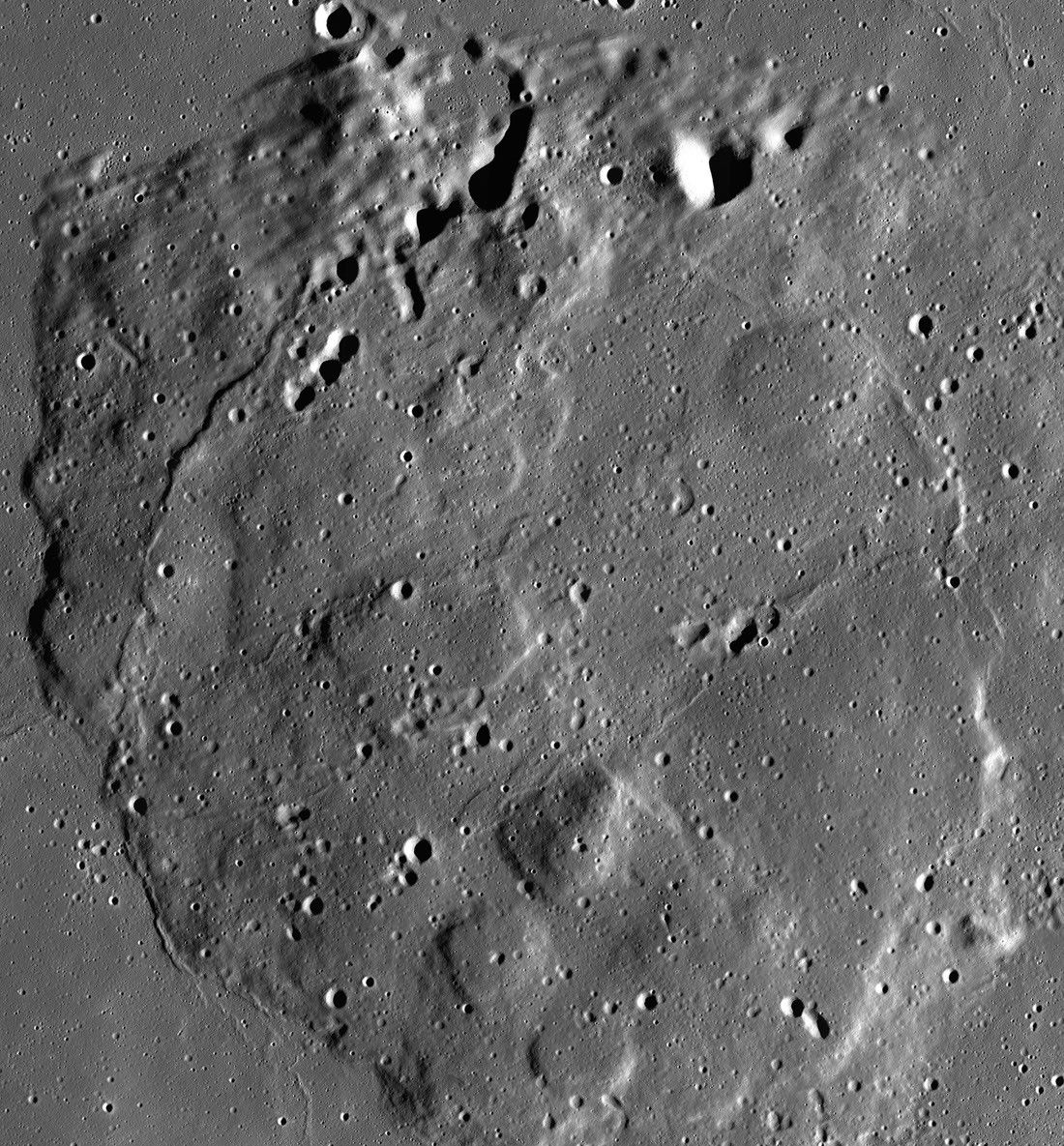
- Cover: LRO Narrow Angle Camera mosaic of Mons Rümker (NASA/GSFC/Arizona State University), from the NASA Science release.