Posts
Browse our latest investigations, impact stories, and evidence-based progress updates.
On 9 September 2026, Einstein and Allen Institute researchers showed in Nature that sparse Sst-Chodl cortical neurons (<1% of cortical GABAergic cells) induce sleep in mice; chemogenetic activation in n=14 mice raised SWS/REM and cut wake (P<0.001).
On 10 September 2026, NIST used transition-edge quantum sensors to measure X-ray emissions from plutonium, uranium and neptunium with unprecedented accuracy, cutting energy uncertainty by about one-third to one-eighth for cleaner nuclear monitoring.
On 8 September 2026, Google DeepMind released AlphaGenome Atlas and ranked all 9 billion possible single-letter DNA mutations in the human genome. The free AVI score prioritizes coding and non-coding variants for research. Early UK Biobank work found 22% more rare non-coding associations. Atlas is a predictive catalogue, not a clinical diagnosis.
On 8 September 2026, Nature Physics published a Stanford–SLAC-led experiment realizing an eight-bit cascaded random-access quantum memory on superconducting circuits. One transmon classically addresses seven storage modes through a buffer; average access infidelity is less than 1.5% per mode. A size-7 full memory cycle stayed under the ~17% surface-code depolarization threshold the paper cites. This is a lab memory module, not a fault-tolerant product.
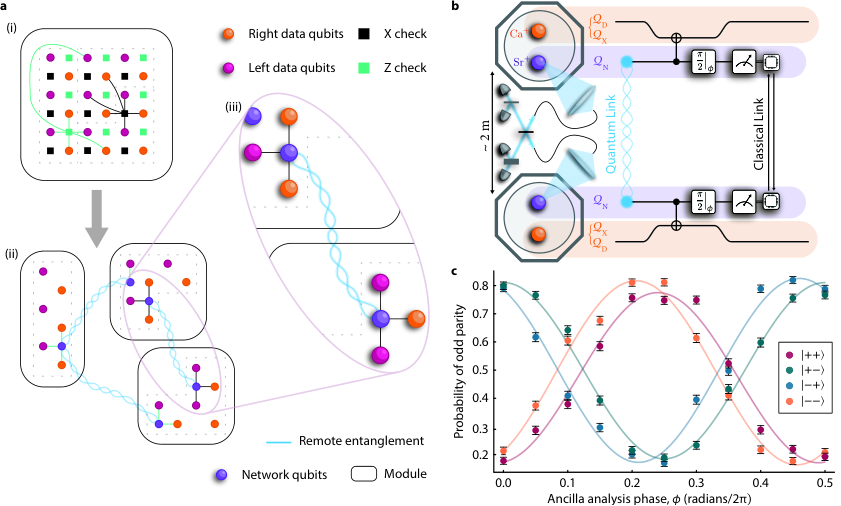
Science Tokyo’s Kenta Kasai published a quantum LDPC code [[9216,4612,d≤48]] in Quantum on 9 September 2026 — about one logical qubit per two physical qubits in simulation.
Astronomers using NASA’s Chandra archive found 84 hypersoft X-ray sources across six galaxies, a new soft-X-ray/UV class reported in Nature Astronomy on 9 September 2026.