S
The Good Signal

Topics

Quantum

Quantum computing with a number you can read on a phone — qubits, memory, and measured gains.

Browse all stories
  1. NIST quantum sensors cut nuclear X-ray uncertainty

    ·Science & Technology

    NIST quantum sensors cut nuclear X-ray uncertainty

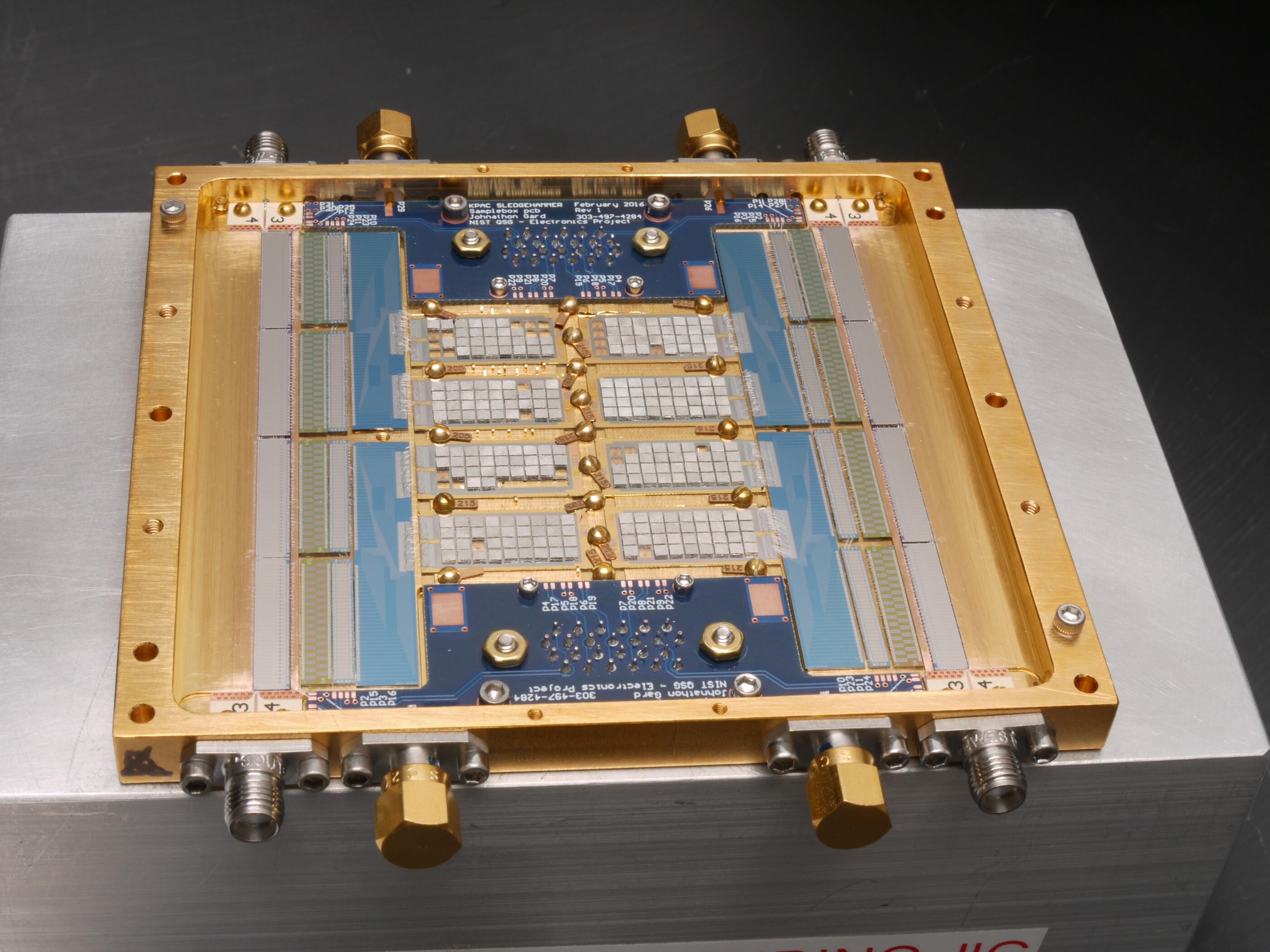
    On 10 September 2026, NIST used transition-edge quantum sensors to measure X-ray emissions from plutonium, uranium and neptunium with unprecedented accuracy, cutting energy uncertainty by about one-third to one-eighth for cleaner nuclear monitoring.

    Read the story
  2. Stanford just built an 8-qubit quantum RAM

    ·Science & Technology

    Stanford just built an 8-qubit quantum RAM

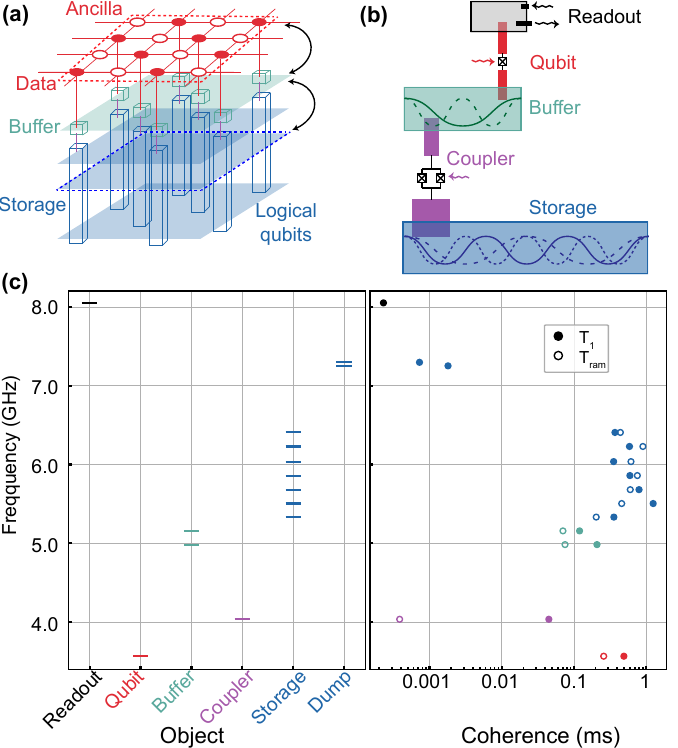
    On 8 September 2026, Nature Physics published a Stanford–SLAC-led experiment realizing an eight-bit cascaded random-access quantum memory on superconducting circuits. One transmon classically addresses seven storage modes through a buffer; average access infidelity is less than 1.5% per mode. A size-7 full memory cycle stayed under the ~17% surface-code depolarization threshold the paper cites. This is a lab memory module, not a fault-tolerant product.

    Read the story
  3. A 98-qubit quantum computer just beat its own hardware

    ·Science & Technology

    A 98-qubit quantum computer just beat its own hardware

    On 2 September 2026, Quantinuum posted arXiv:2609.03194 showing that its 98-qubit trapped-ion Helios processor ran a compact [[20,2,6]] C4-Helix fault-tolerant architecture in which encoded operations beat the matching unencoded physical baselines — without postselection. Repeated QEC error fell to 4.6×10⁻⁵ per logical qubit per cycle; two-qubit logical Clifford error under active QEC was 2.8×10⁻⁴. This is early fault tolerance, not a finished universal machine.

    Read the story
  4. D-Wave’s new qubit gate keeps errors easy to catch

    ·Science & Technology

    D-Wave’s new qubit gate keeps errors easy to catch

    D-Wave’s dual-rail cavity team reports a ~500 ns Swap–Wait–Swap CZ gate in Nature (5 Aug 2026) with ~0.5% erasure per gate and residual Pauli errors below 0.1% after erasure detection. Stim surface-code sims give Λ≈27 versus ~14 for 0.1% depolarizing noise — simulation only, not a hardware logical qubit. The hierarchy holds; a scaled surface-code experiment is still ahead.

    Read the story
  5. IBM quantum computer finishes a hard task in 15 minutes

    ·Science & Technology

    IBM quantum computer finishes a hard task in 15 minutes

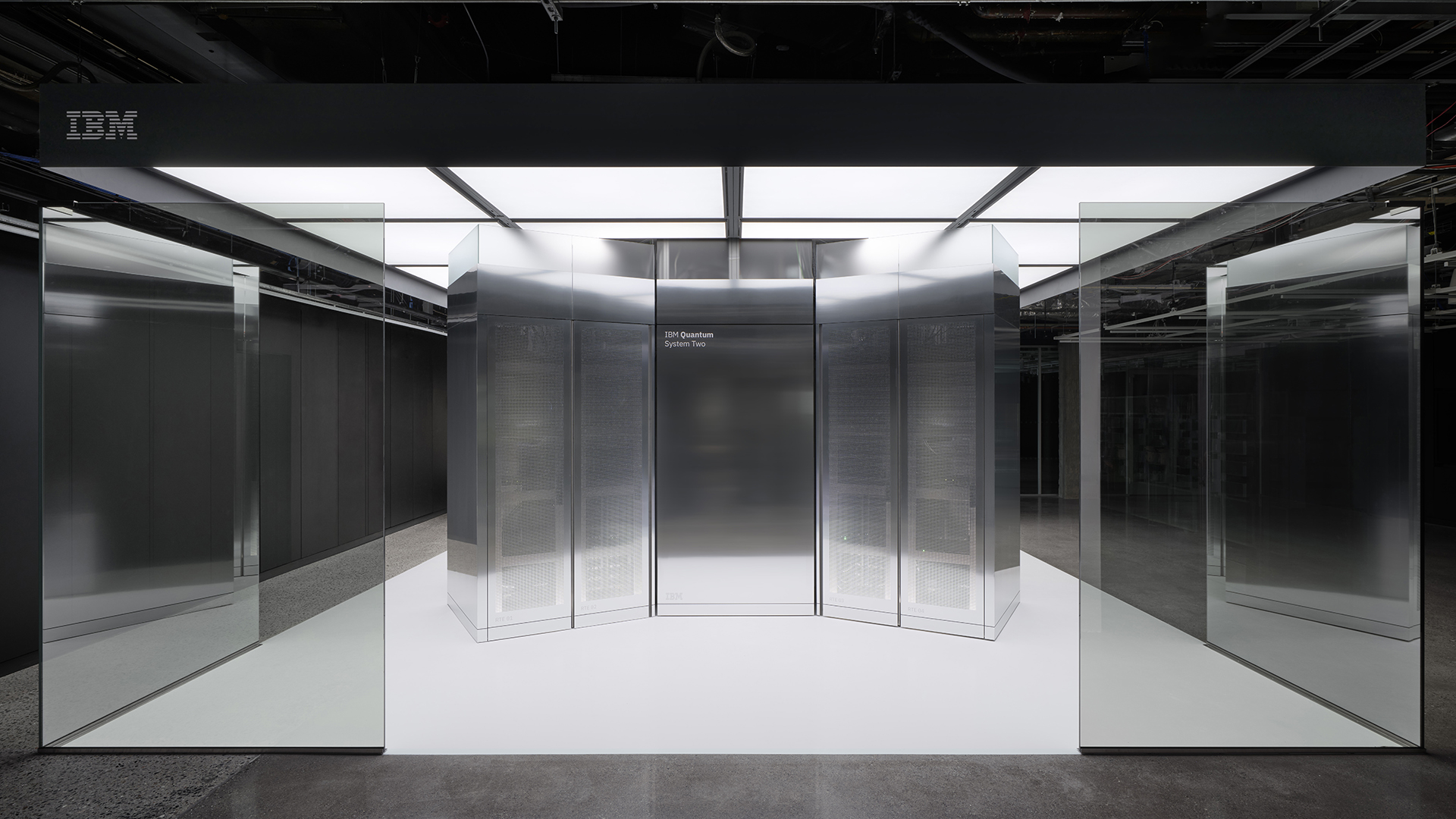
    IBM Research and the University of Chicago reported a doped-Clifford sampling experiment on a superconducting processor. The arXiv paper (28 Jul 2026) runs a 64-qubit depth-73 circuit with 314 T gates on 76 physical qubits, posts a 95% lower bound F₂ ≥ 0.349, and collects 1,389 post-selected samples in about 14.5 minutes — roughly 10× lower effective gate error after syndrome post-selection. IBM’s newsroom frames a related “70 logical qubits / ~15 minutes” milestone; treat those as press figures, not the paper’s headline circuit.

    Read the story
  6. Scientists sent entangled photons 13 miles through open air

    ·Science & Technology

    Scientists sent entangled photons 13 miles through open air

    Brookhaven National Laboratory and Stony Brook University transmitted entangled photons across a 13-mile (21 km) free-space optical link between the Quantum Watchtower and Quantum Lighthouse — the first permanent U.S. link of its kind, adding a wireless leg to a 161-mile, eight-node quantum network. Daytime demo 21 Aug 2026; entangled detection logged 19 Aug at 12:26 a.m. ET.

    Read the story
  7. A 51-ion quantum simulator just got real error bars

    ·Science & Technology

    A 51-ion quantum simulator just got real error bars

    Kraft, Joshi, Kraus, Roos, Zoller and colleagues report in Physical Review X (published 13 Aug 2026; IQOQI note 18 Aug) a bounded-error quantum simulation protocol demonstrated on trapped-ion chains of 10 and 51 40Ca+ ions. The 51-ion learning problem has 14,229 parameters. Error bars are a calibration layer for analog simulators, not fault-tolerant computing.

    Read the story
  8. A quantum computer ran a search without stopping to look

    ·Science & Technology

    A quantum computer ran a search without stopping to look

    University of Innsbruck, RWTH Aachen, Forschungszentrum Jülich and AQT report in Nature Communications a trapped-ion demonstration of measurement-free universal logical quantum computation: Grover’s search on three logical qubits in the error-detecting [[8,3,2]] color code, no mid-circuit measurements. Experimental success probability 0.40(4), below the classical 0.46.

    Read the story
  9. Dutch physicists just read a Majorana qubit’s parity

    ·Science & Technology

    Dutch physicists just read a Majorana qubit’s parity

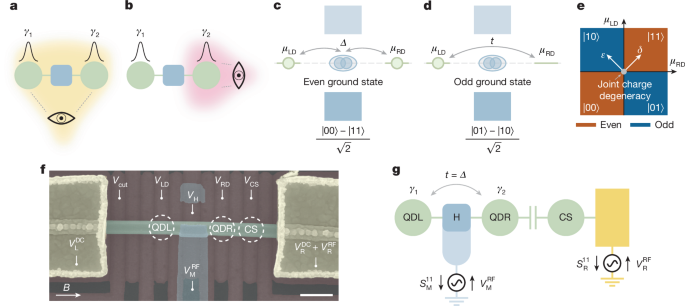
    QuTech, TU Delft and ICMM-CSIC report in Nature a single-shot, real-time parity readout of poor-man’s Majoranas on a two-site Kitaev chain. Parity lifetimes exceed one millisecond; single-shot discrimination is on microsecond timescales. The paper does not report readout fidelity above 99%.

    Read the story