NASA did not launch a telescope on Monday. It posted a coverage clock.
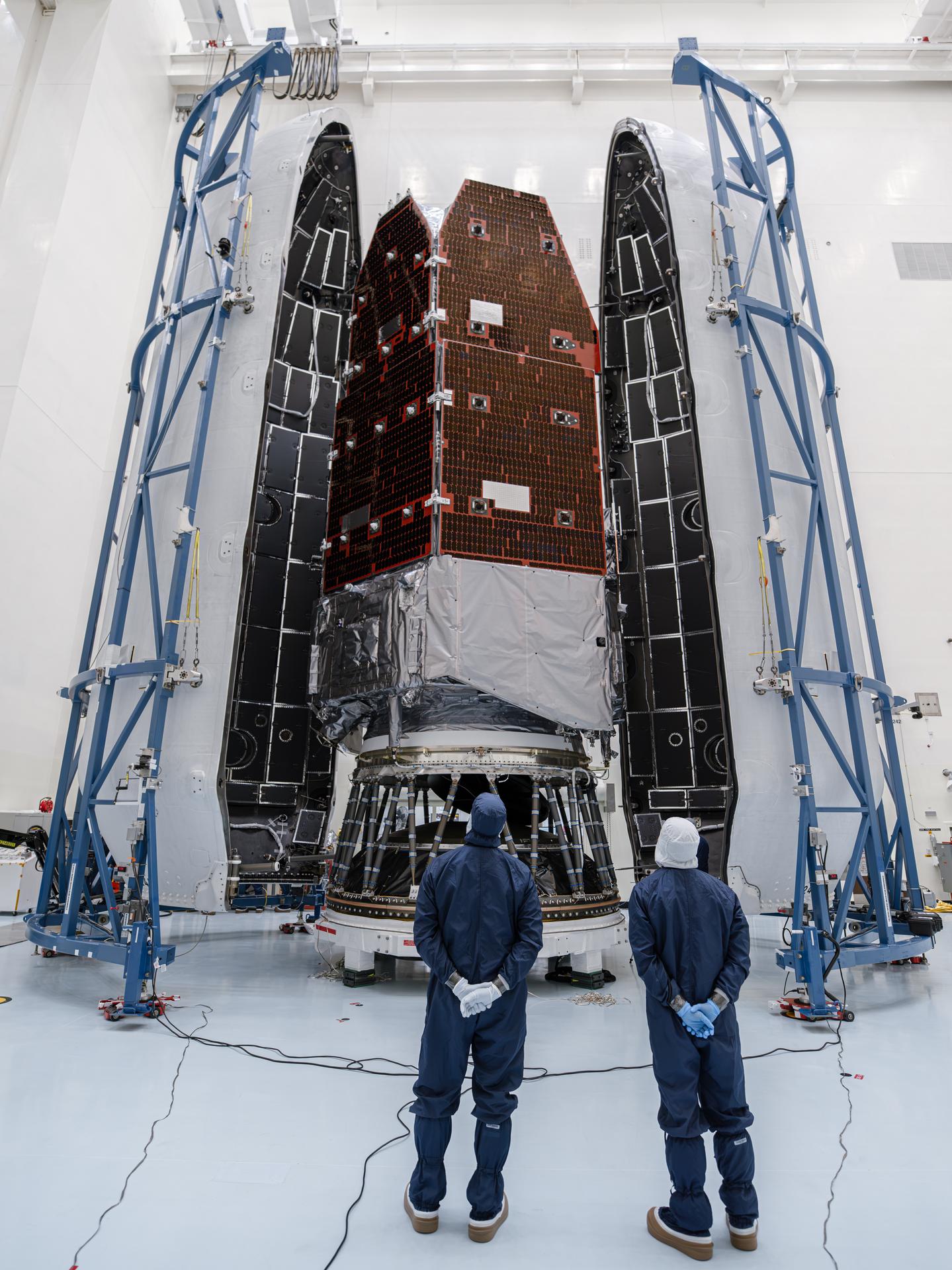
Media advisory M26-063, dated 24 August 2026, is the document the how-to-watch pack is paraphrasing. NASA and SpaceX are targeting the Nancy Grace Roman Space Telescope no earlier than 7:26 a.m. EDT Sunday 30 August — 8:26 a.m. Brasília — on a Falcon Heavy from Launch Complex 39A at Kennedy. Live coverage opens at 6:20 a.m. EDT (7:20 a.m. BRT). The same advisory’s caption still says the observatory is inside the fairing “ahead of mating” to that rocket. Encapsulation and a Flight Readiness Review are not a stacked vehicle on the pad, and they are not first light.
What happened
The Kennedy sequence is on NASA’s Roman blog. On 21 August, teams in the Payload Hazardous Servicing Facility closed a 43-foot Falcon Heavy fairing around the observatory and, the same day, finished a Flight Readiness Review. NASA’s FRR language is narrower than a countdown: the review certified that the mission is ready to begin final launch preparation activities. NASA photographed the sealed stack again on Monday 24 August, still in the servicing facility, ahead of transport to SpaceX’s hangar at pad 39A. Mating and rollout were still to come.
That trip has now happened. NASA’s 25 August Roman blog says the encapsulated observatory arrived Tuesday at the SpaceX hangar at Launch Complex 39A. The convoy left the Payload Hazardous Servicing Facility overnight on 24 August. Mating to Falcon Heavy is still ahead, inside that hangar. NASA, Roman and SpaceX will hold a Launch Readiness Review on Friday 28 August — the final go/no-go poll before the targeted Sunday opening. NASA Launch Services calls this the program’s fourth Falcon Heavy primary, after Psyche, GOES-U and Europa Clipper.
What changed on Monday was not the hardware. It was the public clock. M26-063 is a coverage plan. Saturday 29 August: a mission science briefing at 9 a.m. EDT (10 a.m. BRT) and a prelaunch news conference at 10:30 a.m. EDT (11:30 a.m. BRT). Administrator Jared Isaacman is expected at 11:45 a.m. EDT (12:45 p.m. BRT) to fly past the stacked vehicle — if it is on the pad, and if weather and operations allow. Sunday: coverage at 6:20, targeted liftoff at 7:26, postlaunch conference at 9:30 a.m. EDT (10:30 a.m. BRT). Every time in the advisory is Eastern and “subject to change based on real-time operations.”
That is the peg. It is not a fourth recap of the fairing going on.
The pack, meanwhile, is running two lines. One is NASA’s own comparison, which M26-063 repeats: a field of view at least 100 times larger than Hubble’s. The other is a backup morning. Engadget’s 24 August how-to-watch, published after the advisory, tells readers that if Sunday slips, “NASA and SpaceX will try again on August 31 at 7:22 AM Eastern time.” SpaceX’s Roman mission page is the source those recaps are quoting: Sunday 30 August at 7:26 a.m. ET, “with a backup opportunity available on Monday, August 31 at 7:22 a.m. ET.”
M26-063 does not list 31 August. It does not list 7:22 a.m. It does not name a backup day. NASA’s Roman homepage prints a countdown to 30 August, 7:26 a.m. EDT, and keeps the hedge every other NASA note this week has used: no earlier than / targeting. A contractor window is not an agency backup in the coverage advisory. Treat Monday as unconfirmed by NASA until the Saturday briefings, or a later NASA note, say otherwise.
The number the recaps are skipping
Hubble×100 is a field-of-view slogan. The camera behind it is a mosaic, and the arithmetic is in NASA’s WFI technical page (v1.4, March 2026), not in the how-to-watch copy.
| Item | Number | Source |
|---|---|---|
| WFI detectors | 18 Teledyne H4RG-10 | NASA WFI Technical v1.4 |
| Pixels per detector | 4,096 × 4,096 = 16,777,216 | NASA WFI Technical v1.4 |
| Mosaic (raw count) | 18 × 16,777,216 = 301,989,888 | arithmetic on that spec |
| NASA’s rounding | 300 megapixels | WFI Technical; About Roman; Observatory page |
| Imaging field of view | 0.8° × 0.4° (0.281 deg², excluding detector gaps) | WFI Technical v1.4 |
| Vs Hubble (agency line) | Field of view at least 100× Hubble | M26-063; About Roman |
| Vs Hubble WFC3-IR | ≈200× that camera’s field | WFI Technical v1.4 |
| Sampling | 0.11 arcsec/pixel | WFI Technical v1.4 |
| Primary lifetime | 5 years | M26-063; About Roman; Observatory Technical |
| Goal / extended | 10-year goal (potential 5-year extension) | M26-063; Observatory Technical; About Roman |
| Science data | Public after processing; no exclusive-access period | M26-063; NASA 24 Apr 2025; STScI/MAST |
| Destination | Sun–Earth L2, ~1 million miles (observatory page: ~930,000 miles / 1.5 million km) | M26-063; Roman Observatory |
| Fairing | 43 feet | NASA encapsulation, 24 Aug |
| Primary mirror | 7.9 ft (2.4 m); 410 lb (186 kg) | About Roman; Observatory page |
The 300-megapixel line is a rounding of 18 full 4,096² arrays. A Hubble comparison page still on NASA’s site calls the same camera 288 megapixels — 4,000 × 4,000 × 18. That is a coarser rounding. Use 301,989,888 and NASA’s own 300 MP.
Two Hubble multipliers can both be true. M26-063’s “at least 100 times larger than Hubble” is the agency line. The WFI technical page’s ≈200× is against Hubble’s WFC3-IR. Recaps that flatten both into “100× Hubble” skip the mosaic.
Public data is the other line the livestream will not show. M26-063 says science data “will be publicly available after processing.” NASA’s 24 April 2025 survey-design note is sharper: data from all Roman surveys “will be made public as soon as it is processed, with no periods of exclusive access.” STScI, which will run the archive at MAST, says all cloud-hosted Roman data will be “immediately available to the public without exclusive access.” Both can be true: no Hubble-style PI hold, still a pipeline. The archive does not exist until the telescope is on station.
Why it matters
If it works, Roman is the wide-field counterpart Hubble never was: same class of 2.4-metre aperture, a hundredfold field. NASA’s Hubble-vs-Roman page says that in the first five years Roman will image 50 times as much sky as Hubble covered in 30 years, against Hubble’s roughly 0.1 percent of the sky. About Roman says the WFI will measure light from a billion galaxies over the mission lifetime and run a bulge microlensing survey aiming for more than 1,000 exoplanets. Those are design goals, not on-sky counts.
The five-year / ten-year split is the other number the pack compresses. M26-063: a five-year primary lifetime with a goal of operating for 10 years. About Roman: five years, with a potential five-year extended mission. Observatory Technical: “Five years, with a 10 year goal.” Fuel and a working WFI decide whether the second five years happen.
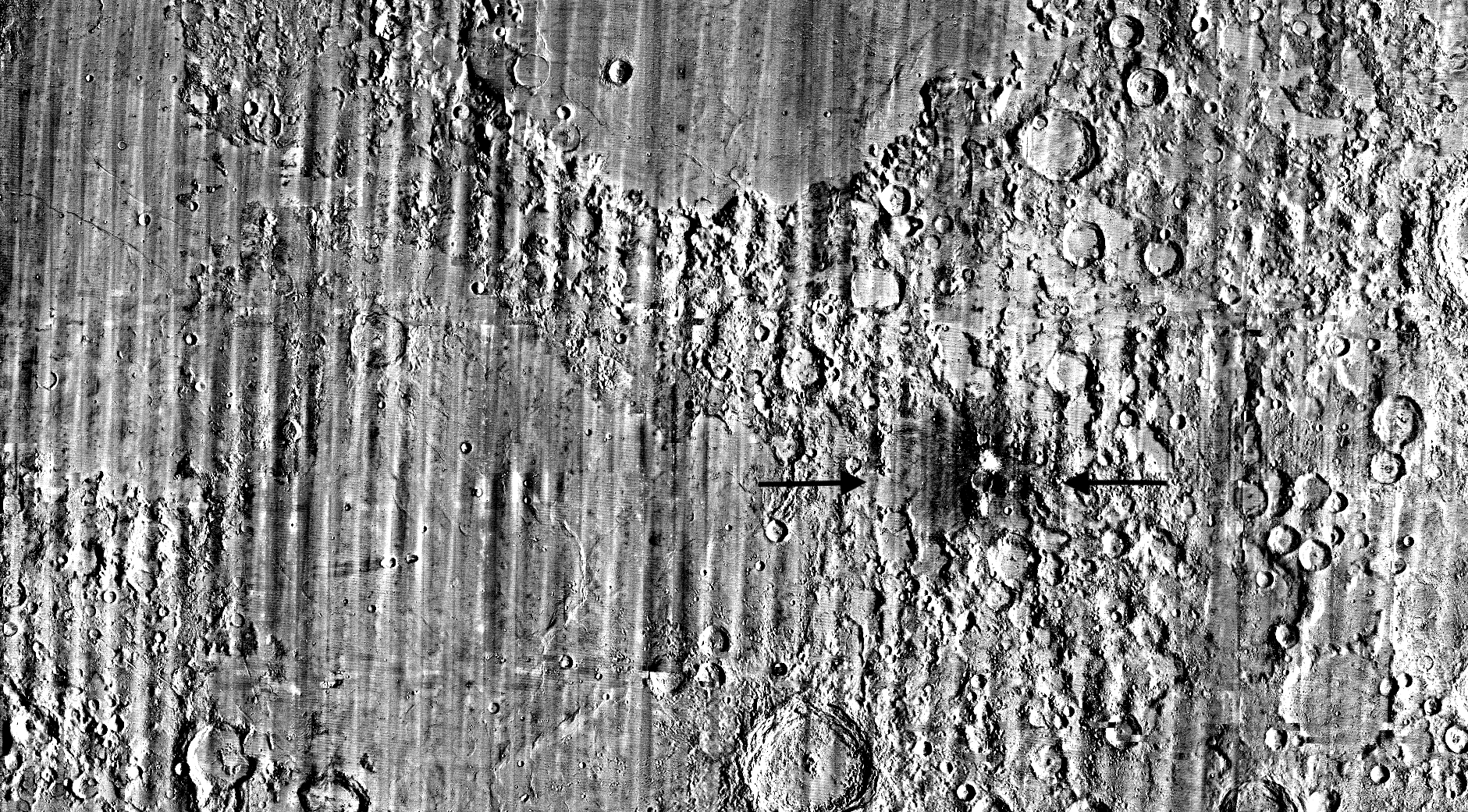
NASA’s other lunar note this week is already on orbit: LRO photographed the crater a Falcon 9 upper stage left on the Moon.
None of that is in the bag. A fairing is a shipping container with a flight job. Falcon Heavy still has to fly a unique stack to L2. The WFI still has to hold Hubble-class images across 18 detectors. The coverage advisory puts mating, rollout and a Sunday opening on a public clock. It does not pass them.
What to watch
Between now and 6:20 a.m. EDT Sunday: whether the payload mates to Falcon Heavy in the hangar and rolls to 39A. Friday’s Launch Readiness Review is the remaining agency go/no-go. M26-063’s 24 August photograph was still “ahead of mating”; the 25 August hangar post is the later NASA note. If Saturday’s 10:30 a.m. EDT news conference holds 30 August, that is the agency talking. If it slips the attempt, listen for a NASA date — not a recycled 7:22 a.m. Monday from a contractor page the advisory never printed.
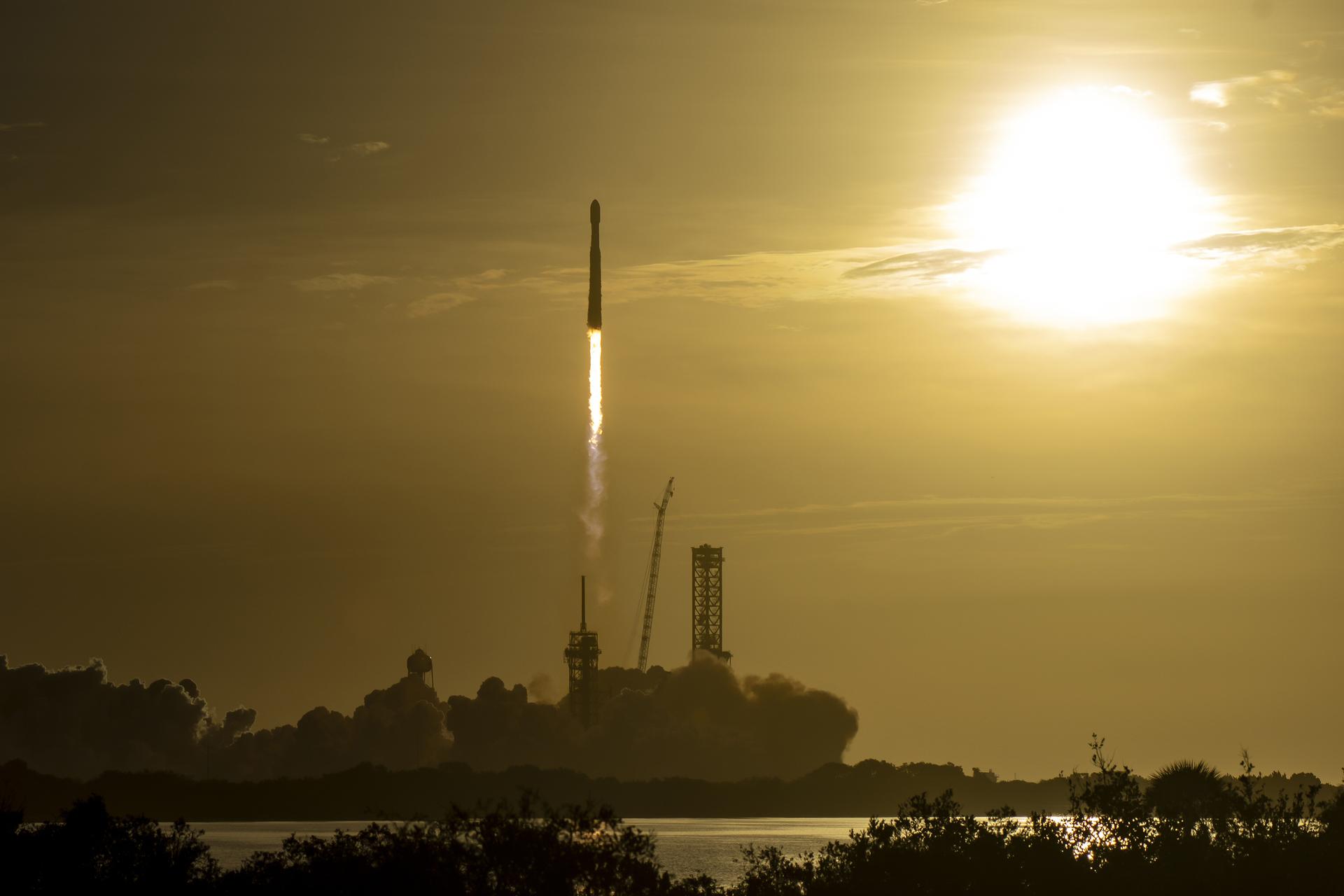
On Sunday morning the question is whether Falcon Heavy leaves LC-39A at 7:26 a.m. EDT / 8:26 a.m. BRT, or whether “no earlier than” does what those words are for. Fairing separation, a few minutes after liftoff, is the first time the observatory is a free spacecraft. Everything after that is cruise, L2 insertion and survey — months, not a livestream.
Until the vehicle clears the tower, the verified facts are smaller: as of NASA’s 25 August hangar note, Roman is inside the 43-foot fairing at the SpaceX hangar at LC-39A, the Flight Readiness Review is complete, mating is still ahead, a Launch Readiness Review is set for Friday 28 August, the WFI is 18 × 4,096² pixels, and the coverage clock to a targeted 30 August opening is running. NASA has not, in M26-063, named Monday.
Sources
- NASA, media advisory M26-063, “NASA Sets Coverage for Roman Space Telescope Launch from Florida,” 24 Aug 2026, https://www.nasa.gov/news-release/nasa-sets-coverage-for-roman-space-telescope-launch-from-florida/
- NASA, “NASA’s Roman Telescope Enclosed in SpaceX Falcon Heavy Rocket Fairing,” 24 Aug 2026, https://science.nasa.gov/blogs/roman/2026/08/24/nasas-roman-telescope-enclosed-in-spacex-falcon-heavy-rocket-fairing/
- NASA, “NASA’s Nancy Grace Roman Space Telescope Arrives at Hangar,” 25 Aug 2026, https://science.nasa.gov/blogs/roman/2026/08/25/nasas-nancy-grace-roman-space-telescope-arrives-at-hangar/
- NASA, “Teams Complete Flight Readiness Review for NASA’s Roman Telescope,” 21 Aug 2026, https://science.nasa.gov/blogs/roman/2026/08/21/teams-complete-flight-readiness-review-for-nasas-roman-telescope/
- NASA, WFI Technical v1.4 (March 2026), https://science.nasa.gov/mission/roman-space-telescope/wfi-technical/
- NASA, About Roman, https://science.nasa.gov/mission/roman-space-telescope/introducing-the-roman-space-telescope/
- NASA, Observatory Technical, https://science.nasa.gov/mission/roman-space-telescope/observatory-technical/
- NASA, The Roman Observatory, https://science.nasa.gov/mission/roman-space-telescope/roman-observatory/
- NASA, Hubble vs. Roman, https://science.nasa.gov/mission/hubble/observatory/hubble-vs-roman/
- NASA, “NASA’s Roman Mission Shares Detailed Plans to Scour Skies,” 24 Apr 2025, https://www.nasa.gov/missions/roman-space-telescope/nasas-roman-mission-shares-detailed-plans-to-scour-skies/
- NASA, Nancy Grace Roman Space Telescope mission page, https://science.nasa.gov/mission/roman-space-telescope/
- STScI / MAST, Roman Space Telescope, https://archive.stsci.edu/missions-and-data/roman
- Engadget, Mariella Moon, “How to watch the Nancy Grace Roman Space Telescope’s launch,” 24 Aug 2026, https://www.engadget.com/2243391/how-to-watch-the-nancy-grace-roman-space-telescopes-launch/
- SpaceX, Roman Space Telescope Mission (backup window as quoted by contemporaneous recaps), https://www.spacex.com/launches/roman
Cover: NASA/Sydney Rohde (Rocz), KSC-20260821-PH-SER01_0003. HEAD 200 on 25 Aug 2026.