NASA’s Nancy Grace Roman Space Telescope has fuel for at least 22 years of potential science operations — more than double the mission’s original 10-year fuel budget — after a precise first mid-course correction and other propellant savings, NASA Goddard reported on 14 September 2026.
That is a fuel ledger, not a funded calendar. Roman was designed for a five-year primary mission plus a five-year extended mission; the new figure is how long the tanks could support station-keeping and science burns if other systems and budgets hold. The second mid-course correction is still ahead this month, and the observatory is still months from its final orbit at Sun–Earth L2.
Why it matters
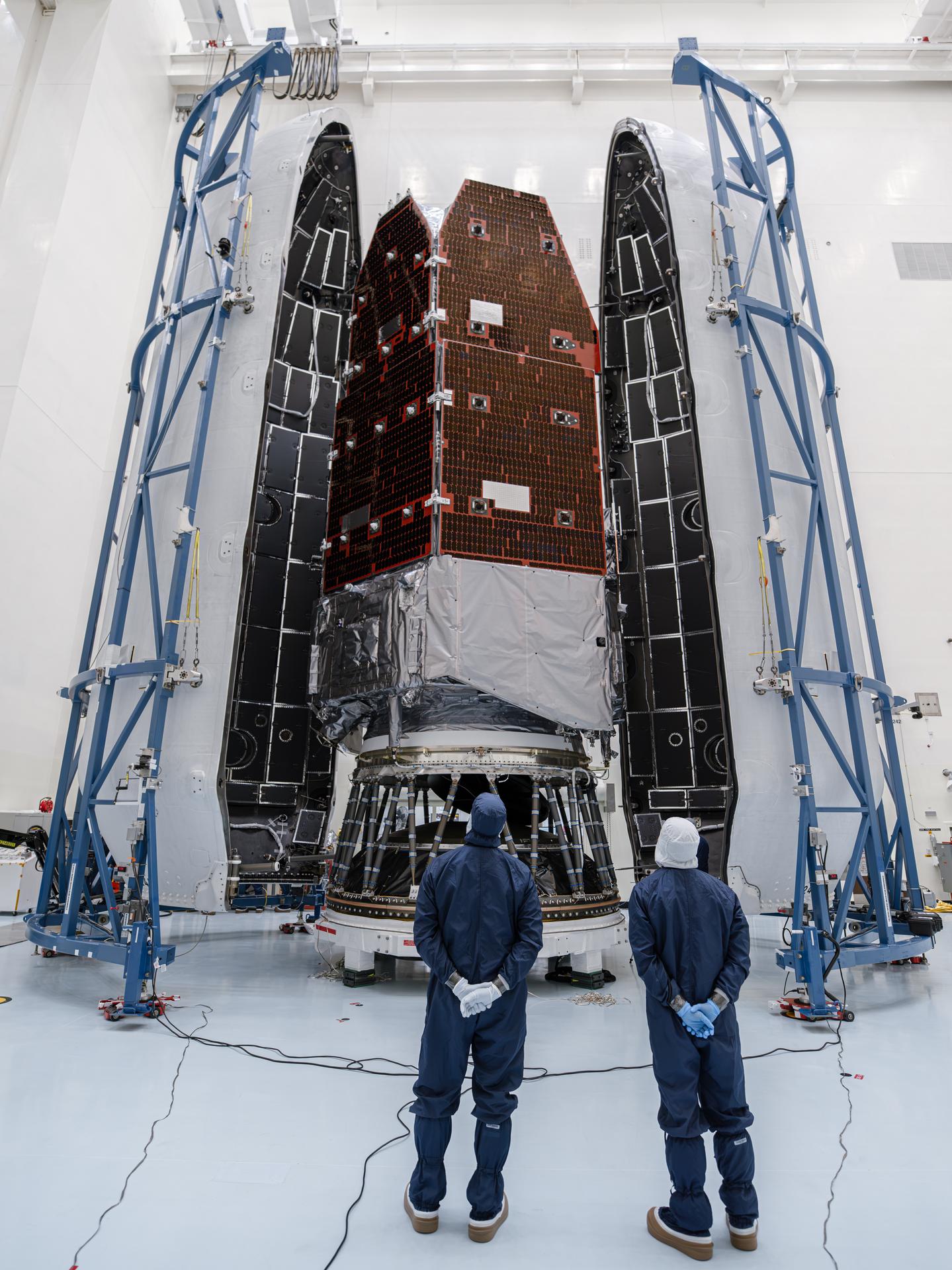
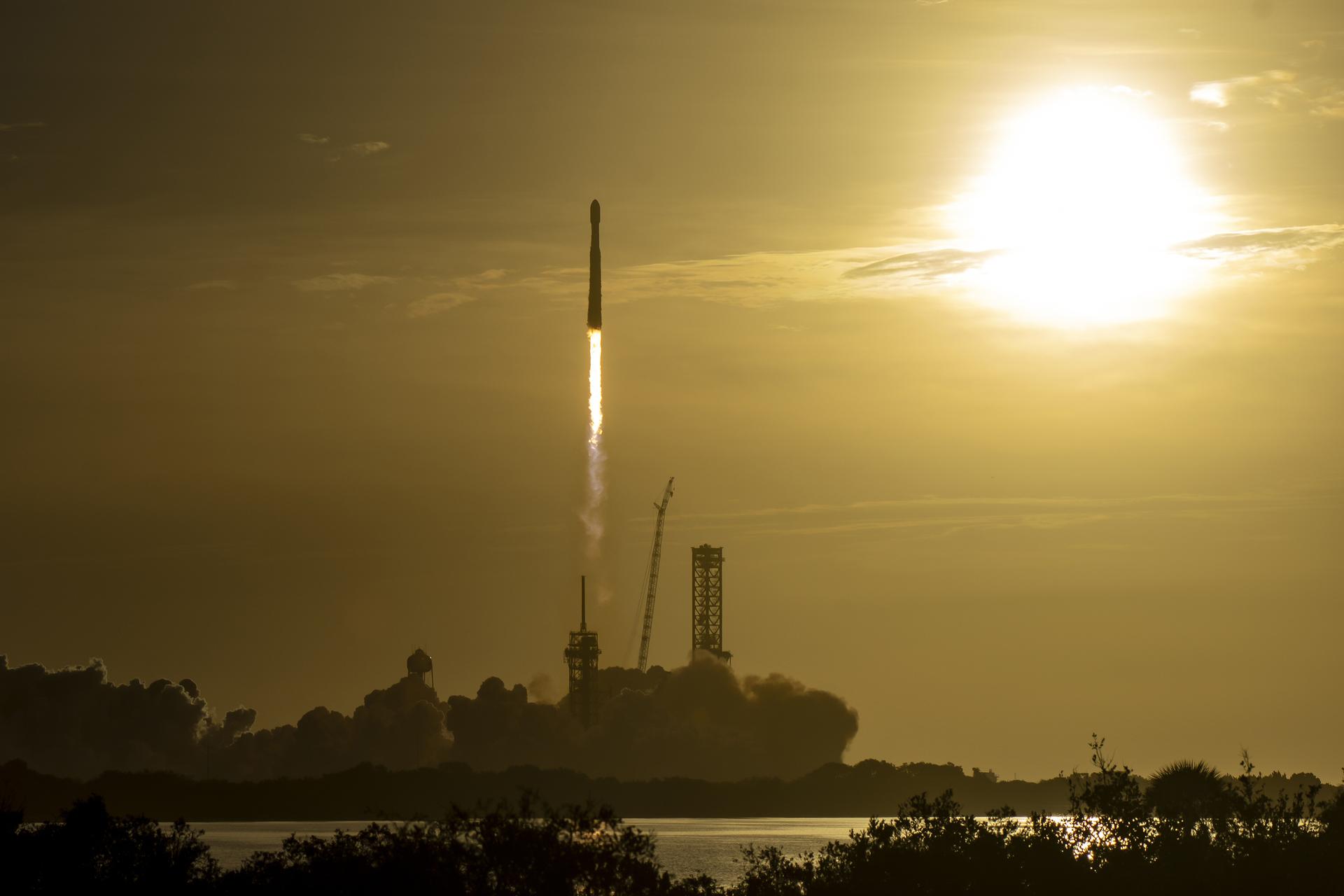
Roman is NASA’s next flagship wide-field infrared observatory. It launched 30 August 2026 on a SpaceX Falcon Heavy from Kennedy Space Center and is now on a roughly 100-day cruise to L2, with arrival expected around early December. Extra years of fuel do not invent new detectors, but they do stretch the window in which those detectors can map dark energy, dark matter, and exoplanets across vast sky patches — work that compounds the longer the observatory stays healthy.
Fuel is Roman’s primary consumable. When the tanks last longer than the design life, every survey program — microlensing planet searches, high-latitude cosmology, coronagraph technology demos — has more calendar room before propellant, not only hardware aging, becomes the hard stop.
For a mission already sold as surveying the sky about a thousand times faster than Hubble in its wide-field mode, a doubled fuel horizon is concrete progress readers can feel without a methods appendix.
Key numbers
| Item | Figure | Source note |
|---|---|---|
| Potential science life (fuel) | ≥ 22 years | Jamie Dunn, NASA Goddard center director, 14 Sep 2026 |
| Original fuel budget | 10 years (5 primary + 5 extended) | NASA Roman blog |
| First mid-course correction | 31 Aug 2026 | Trajectory toward L2 |
| Burn accuracy | > 99% | NASA analysis after the burn |
| Fuel used vs budgeted | ~18 kg (40 lb) vs ~200 kg (441 lb) — < 10% of allocation | First burn |
| Estimated life from first-burn savings | + ~4 years | NASA breakdown |
| Bonus propellant at launch | + ~4 years | Tanks filled beyond 10-year need |
| Launch mass vs max used for fuel planning | 8,056 kg (17,760 lb) vs 9,800 kg (21,605 lb) | Lighter craft → more propellant room |
| Upcoming second burn + insertion (projected) | + ~4 years expected | Second burn later this month; L2 insertion ~100 days after launch |
| Station-keeping once at L2 | Roughly every 28 days | NASA commissioning note |
How Roman banked the years
Three stacked savings produced the 22-year fuel story.
1. A frugal first burn. On 31 August, controllers fired the first mid-course correction to put Roman on the right path to L2. NASA says the burn landed with more than 99% accuracy and burned only about 40 pounds (18 kilograms) of propellant — less than a tenth of the 441 pounds (200 kilograms) set aside. That alone is worth roughly four extra years on the fuel clock.
2. Extra propellant at launch. Roman flew lighter than the conservative maximum mass used to size the propellant load. Planners had budgeted against 21,605 pounds (9,800 kilograms); the observatory’s actual mass was 17,760 pounds (8,056 kilograms). Because mass came in under that ceiling, the team could fill the tanks to capacity rather than only to the 10-year requirement. Alison Rao, Roman propulsion lead at Goddard, said the surplus is the point of tracking real mass through integration: when the spacecraft is lighter than the planning maximum, the tanks get the leftover room. NASA credits that launch surplus with about four more years.
3. A smaller second burn still to come. With the first correction so accurate, the follow-up burn — now planned for later this month — is expected to be very small. Controllers can also wait longer before firing it. That burn, plus insertion into the final L2 orbit about 100 days after launch (early December on current plans), is projected to save enough propellant for another roughly four years. Once at L2, Roman only needs periodic station-keeping burns about every 28 days.
Add those pieces to the original 10-year fuel budget and NASA’s public math lands at at least 22 years of potential science operations — the line Goddard center director Jamie Dunn put on the record on 14 September.
What this is not
- Not a guarantee of 22 funded years. Fuel potential is not the same as congressional appropriations, instrument health, or ground-segment support. The primary mission remains five years; extensions are decisions, not automatic.
- Not “Roman already doubled its science output.” The observatory is still commissioning on the way to L2. First light and survey products are still ahead; this update is about propellant accounting after the first burn analysis.
- Not a claim that the second burn already happened. NASA’s +4 years from the upcoming burn and insertion is a projection based on the first burn’s success. The tanks will tell the final story after those maneuvers.
- Not a duplicate of the coronagraph power-on story. On 1 September the team powered on Roman’s Coronagraph Instrument; that was an electronics milestone. Today’s peg is the fuel lifetime analysis published 14 September.
What to watch
- Second mid-course correction later this month — how small the burn actually is, and how much propellant remains afterward.
- L2 arrival / orbital insertion around early December (~100 days after the 30 August launch).
- Commissioning and first images once Wide Field Instrument activation and calibrations finish — NASA has pointed to early 2027 for first public images in prior launch coverage.
- Whether NASA and partners translate fuel headroom into survey extensions beyond the five-year primary and five-year extended design, or hold the extra life as contingency.
Sources
Primary (fetched):
- Ashley Balzer, “Fuel Savings Double Potential Lifetime for NASA’s Roman Mission,” NASA Science / Roman blog, 14 September 2026, 5:33 p.m. — https://science.nasa.gov/blogs/roman/2026/09/14/fuel-savings-double-potential-lifetime-for-nasas-roman-mission/
Context (mission timeline already on public NASA pages):
- NASA launch coverage for the Nancy Grace Roman Space Telescope (30 August 2026 Falcon Heavy, Kennedy LC-39A)
- NASA Roman commissioning / L2 cruise notes referenced from the same blog family
Cover image: NASA launch photography of the Roman Space Telescope mission (30 August 2026), public domain / NASA.