What happened
NASA’s Chandra X-ray Observatory just turned up a population that does not match any familiar class of cosmic object.
In a NASA release dated 9 September 2026, and in a paper published the same week in Nature Astronomy, a team led by Mustafa Muhibullah of the University of Alabama reported 84 “hypersoft X-ray sources” across six galaxies. The objects glow brightly in the softest X-rays Chandra can see — and effectively vanish in harder X-ray images — while also pouring out intense ultraviolet light.
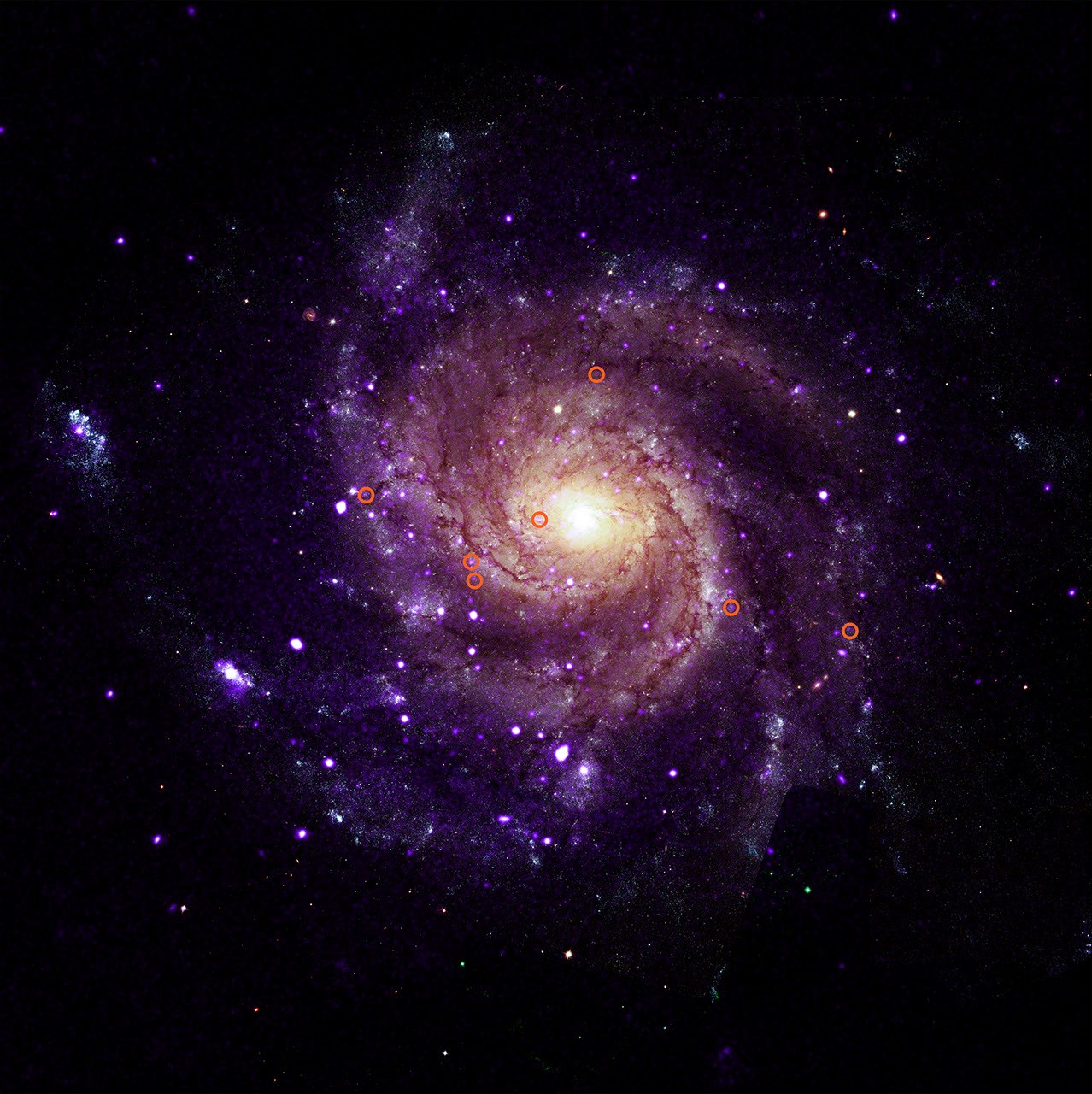
Two of the galaxies are nearby spirals everyone knows: M31 (Andromeda) and M101 (the Pinwheel). The other four are ellipticals. The sources show up both in busy star-forming regions and in quieter zones of older stars. Co-authors include Jimmy Irwin (Alabama) and Rosanne Di Stefano of the Center for Astrophysics | Harvard & Smithsonian.
This is not a claim that astronomers have already named a new star type with a tidy evolutionary track. It is an archive discovery: a blind spot cleaned out of public Chandra data, with two long-standing mysteries suddenly looking connected.
Why it matters
Soft X-rays are hard for telescopes to catch, and the ultraviolet those objects seem to produce is easily swallowed by interstellar gas. That combination made the population easy to miss. If the sources are as common as this six-galaxy sample suggests, galaxies may host large numbers of energetic binaries that standard surveys skimmed past.
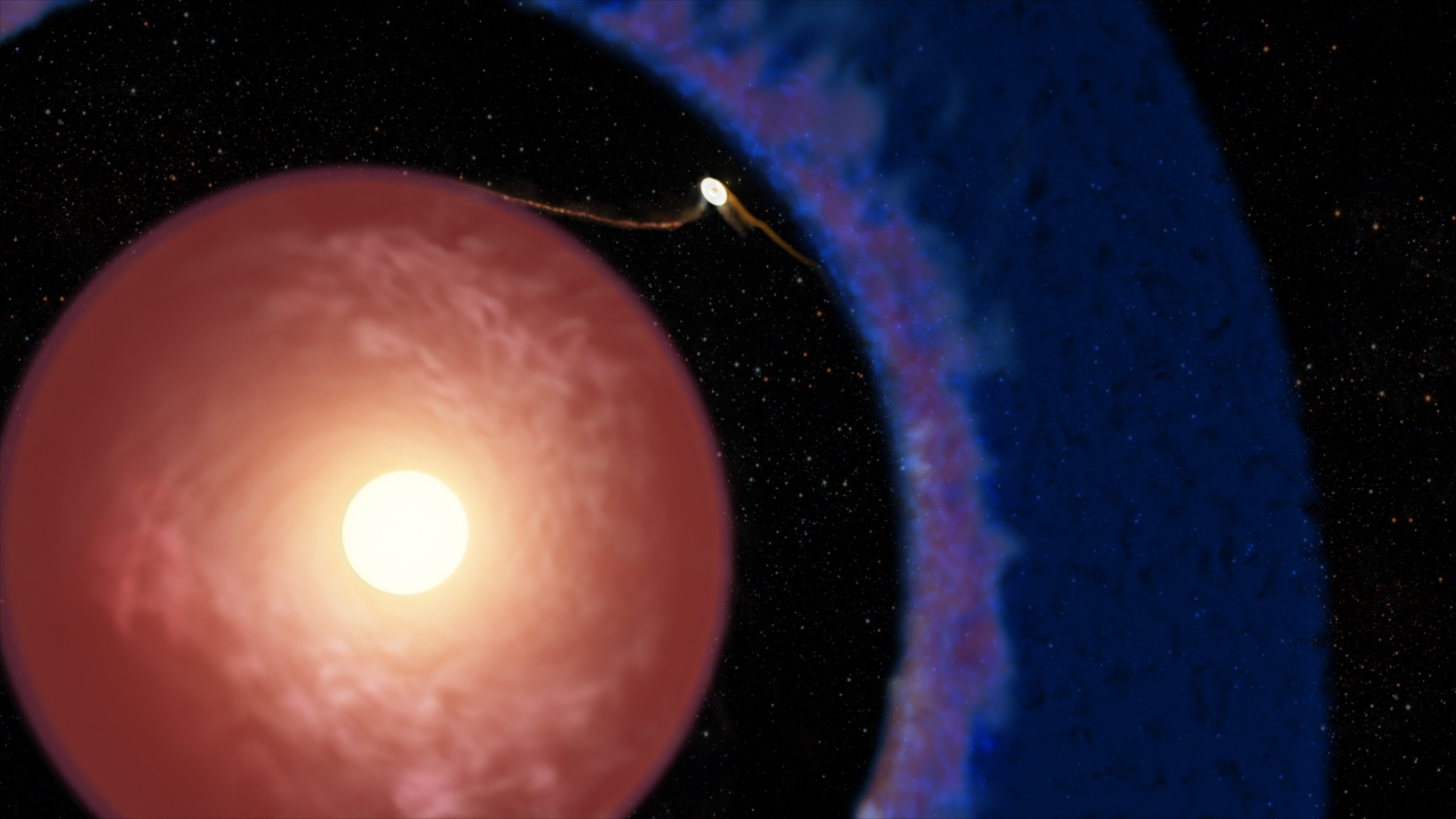
The team’s working picture is a compact object — a black hole, neutron star, or white dwarf — pulling gas from a companion. Similar binaries are known, but not with this extreme soft-X-ray plus bright-UV signature. Two payoffs sit on the table:
- Type Ia supernova progenitors. Some white-dwarf binaries are thought to explode as the standard-candle supernovae used to measure cosmic expansion. Astronomers still struggle to catch the systems before they detonate. Hypersoft sources are candidates worth watching, not confirmed fuses.
- Missing ionization. Hot massive stars cannot fully explain why gas between stars in some galaxies is stripped of electrons. Extra ultraviolet from this class could help close the budget.
“We’ve never encountered a group of objects that act like this,” Muhibullah said in the NASA release. Di Stefano put the method plainly: combing the Chandra archive eliminated “what used to be a blind spot for telescopes.”
The numbers
| Fact | Value |
|---|---|
| Hypersoft sources found | 84 |
| Galaxies searched | 6 (M31, M101 + 4 ellipticals) |
| Selection | Soft-band detections that vanish in harder bands |
| Journal | Nature Astronomy (published week of 9 Sep 2026) |
| Data | Public Chandra archive |
| Galaxy type in sample | Examples |
|---|---|
| Spiral | M31 (Andromeda), M101 (Pinwheel) |
| Elliptical | Four additional systems in the paper’s sample |
The search trick is almost childishly simple once stated: keep objects that appear in Chandra’s lowest-energy images and disappear at higher energies. That soft spectrum sits next door to ultraviolet on the electromagnetic spectrum, which is how the team inferred the intense UV output even when UV itself is hard to observe directly through the gas.
How they found them
Chandra’s archive is deep enough that “new” classes can still hide in old pointings. Marshall Space Flight Center manages the Chandra program; the Smithsonian Astrophysical Observatory runs science and flight operations. The Alabama–CfA team did not need a new dedicated survey — they needed a selection cut nobody had applied systematically across these galaxies.
Follow-up will decide among black-hole, neutron-star, and white-dwarf scenarios, and whether the ultraviolet truly dominates the energy budget the way the soft X-rays imply. Multiwavelength campaigns (UV telescopes, optical variability, harder X-ray limits) are the obvious next instruments.
What this is not
- Not a finished classification. “Hypersoft X-ray source” is a phenomenological label until spectroscopy and timing pin down the engines.
- Not proof of Type Ia progenitors. The supernova link is a motivation, not a result.
- Not dark matter. Nothing in the release claims exotic particles.
- Not rare museum pieces only in M101. The count is 84 across six galaxies; the annotated M101 image is the public face of a larger haul.
What to watch
Watch for the Nature Astronomy paper’s tables on luminosities and host environments, for UV follow-up that confirms the inferred radiation, and for searches that extend the census beyond the first six galaxies. If even a subset of the white-dwarf candidates shows the right mass-transfer behavior, the Type Ia progenitor hunt gains a new shortlist. If the ionization math works in ellipticals as well as spirals, galaxy-evolution models gain a missing UV term.
Sources
- NASA Science / Chandra, “NASA’s Chandra Unveils Mysterious X-Ray Objects,” 9 September 2026: science.nasa.gov/missions/chandra/nasas-chandra-unveils-mysterious-x-ray-objects/
- Muhibullah et al., Nature Astronomy (published week of 9 September 2026), as cited in the NASA release