Posts
Browse our latest investigations, impact stories, and evidence-based progress updates.
The NASA probe's reentry, brought forward by a more intense solar cycle, reinforces a practical lesson: space weather forecasting is not a niche topic—it is protection for satellites, energy, and communications.
A new NASA technical update shows how cognitive load modeling, training, and crew size are moving from theory to operational decisions for long-duration Mars missions.
Study published in Nature reports a certified efficiency of 27.62% in a silicon solar cell with an industry-compatible architecture — a technical advance that could accelerate the drop in cost per watt in upcoming manufacturing cycles.
New NASA monitoring shows the dust plume advancing over Europe and reinforces a practical point for governments, operators, and companies: without atmospheric forecasting and adaptive operations, dust events can significantly reduce photovoltaic generation on critical days.
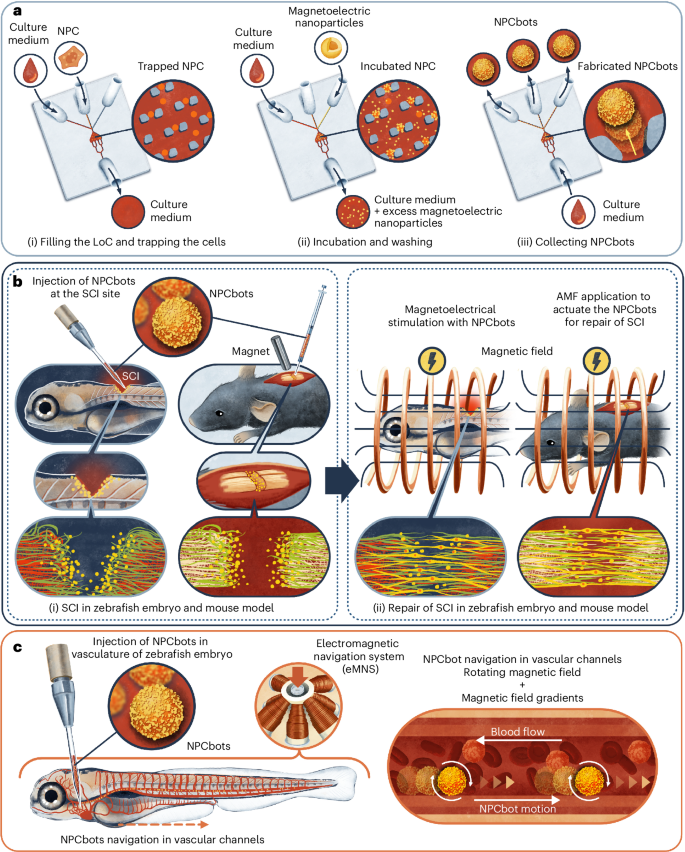
ETH Zurich and the University of Zurich report in Nature Materials (2 June 2026) that magnetically guided NPCbots improved motor function after complete spinal transection in mice at 28 days, and near-normal swimming in zebrafish in 3 days. This is a peer-reviewed animal study, not an unverified single-mouse anecdote, and not a cure.
New Webb observations extended the object’s tracking arc and removed remaining uncertainty about a possible 2032 Moon impact.