Posts
Browse our latest investigations, impact stories, and evidence-based progress updates.
On 17 September 2026 Science published Stanford’s Virtual Biotech: more than 37,000 AI agents curated 55,984 trials and found cell-type-specific targets were 40% more likely to clear Phase I–II, 48% more likely to reach market, and linked to 32% fewer adverse events — then proposed a B7-H3 antibody–drug conjugate for lung cancer. Computational strategy, not a Stanford FDA approval.
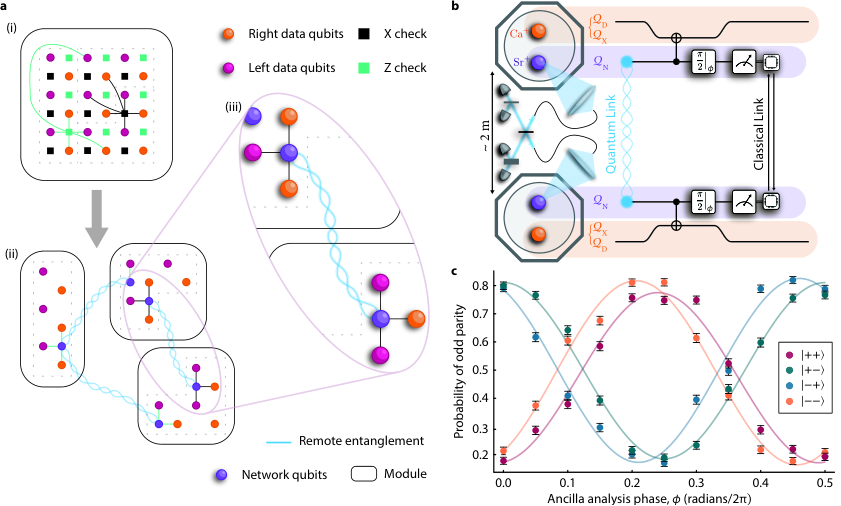
On 11 September 2026 an Oxford-led team posted arXiv:2609.13065 reporting the first experimental distributed quantum error detection and correction: remote syndrome measurements between two trapped-ion modules ~2 m apart, a distributed [[2,1,1]] repetition code that suppresses logical phase-flip errors in real time, and active feedforward correction of Pauli errors on a distributed Bell state (average prepared fidelity 82.5±1.5%). A modular QEC demo, not a fault-tolerant product.
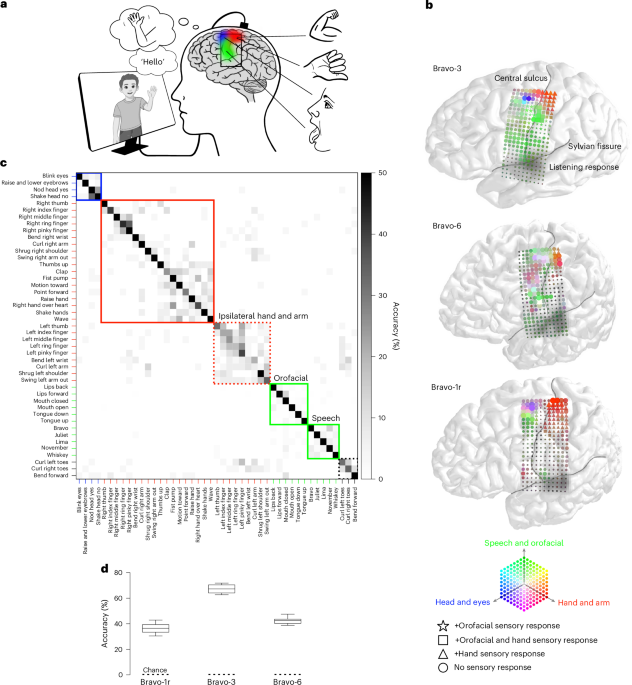
On 14 September 2026 Nature Neuroscience reported that a single high-density ECoG implant decoded speech and upper-limb gestures in parallel in people with paralysis, driving a personalized full-body avatar. In real-time copy tasks, one participant reached about 70% speech and 66% gesture accuracy across 10 phrases and 10 gestures (chance ~9% each). Proof-of-concept multi-effector BCI, not a consumer product.
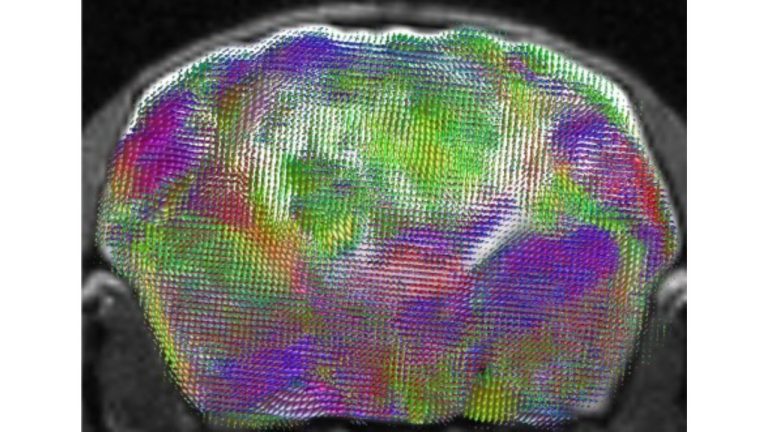
On 16 September 2026 Stanford Medicine reported in Nature that human cortical organoids transplanted into “apallial” mice — engineered to lack most cortex and hippocampus — expanded nearly fivefold and filled more than 90% of the vacant cortical volume within two to three months, wiring into mouse circuits including the spinal cord and producing rare von Economo–like neurons (~1 in 90,000 cortical cells). A research model for neurodevelopment and injury, not a human therapy.
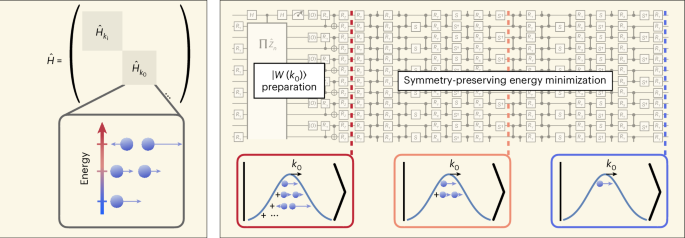
On 11 September 2026 Nature Physics published Caltech–University of Washington work using 104 qubits on IBM’s ibm_marrakesh processor — with up to 5,589 two-qubit gates — that reports evidence of inelastic particle production in one-dimensional Ising field theory. Skewness in the measured energy density flags a heavier outgoing particle. It is a digital quantum simulation of a model collision, not an LHC result.
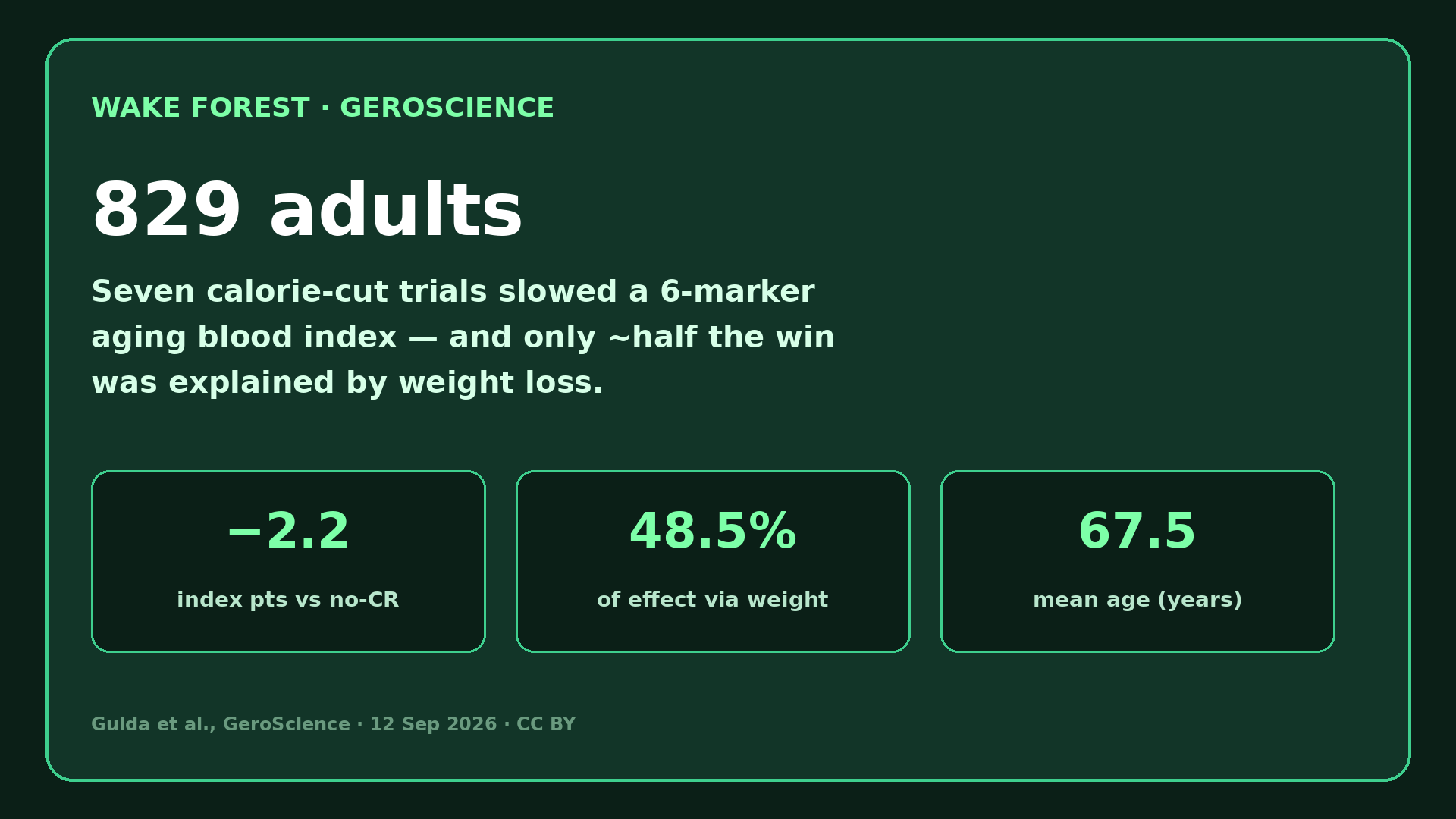
On 12 September 2026, Wake Forest’s GeroScience pooled analysis of seven randomized calorie-restriction trials (n=829; mean age 67.5) found CR improved a six-marker aging blood index by −2.2 points versus no-CR; only 48.5% of that effect was mediated by weight loss. A biomarker index win, not proven extra years of life.