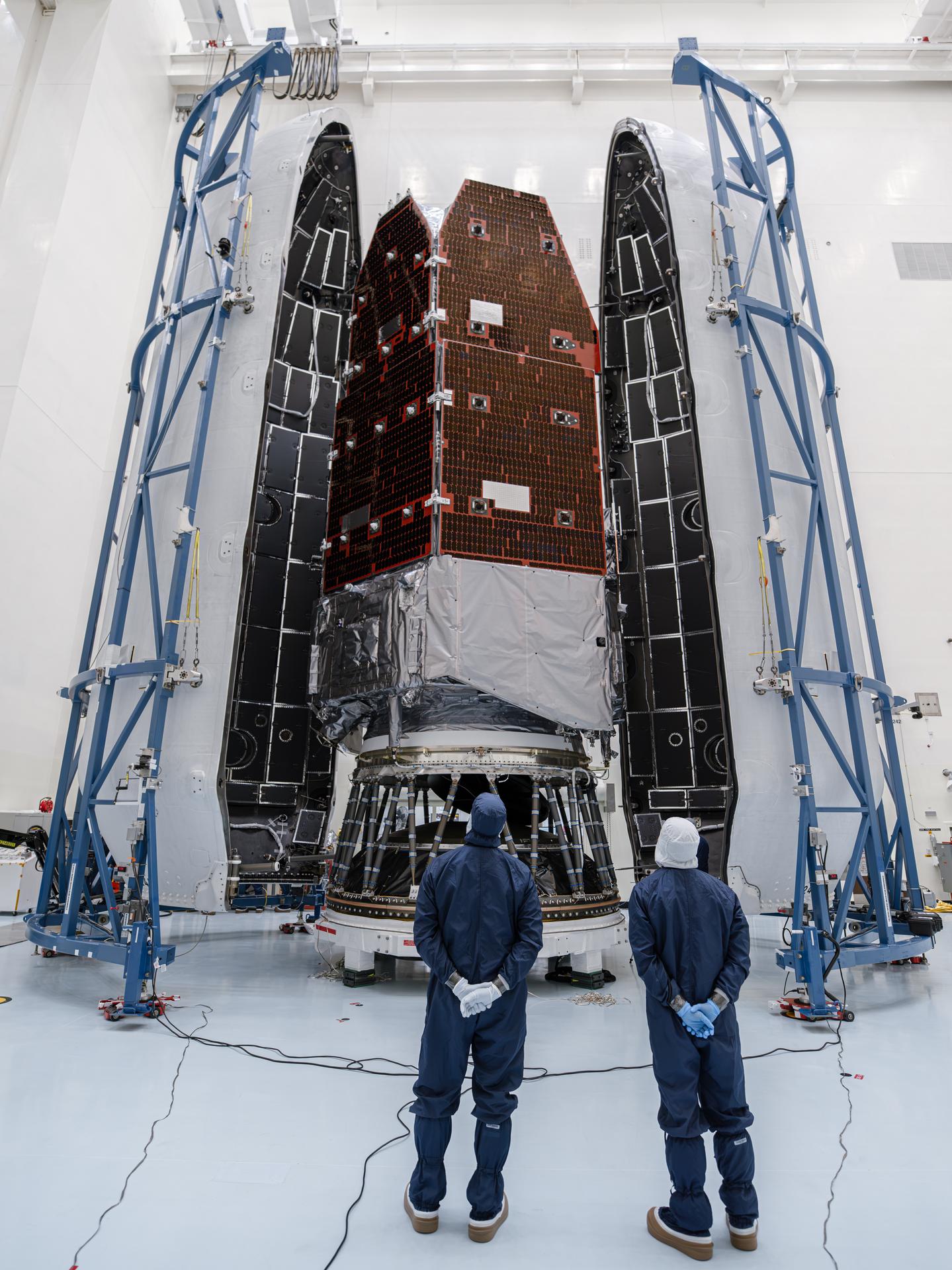
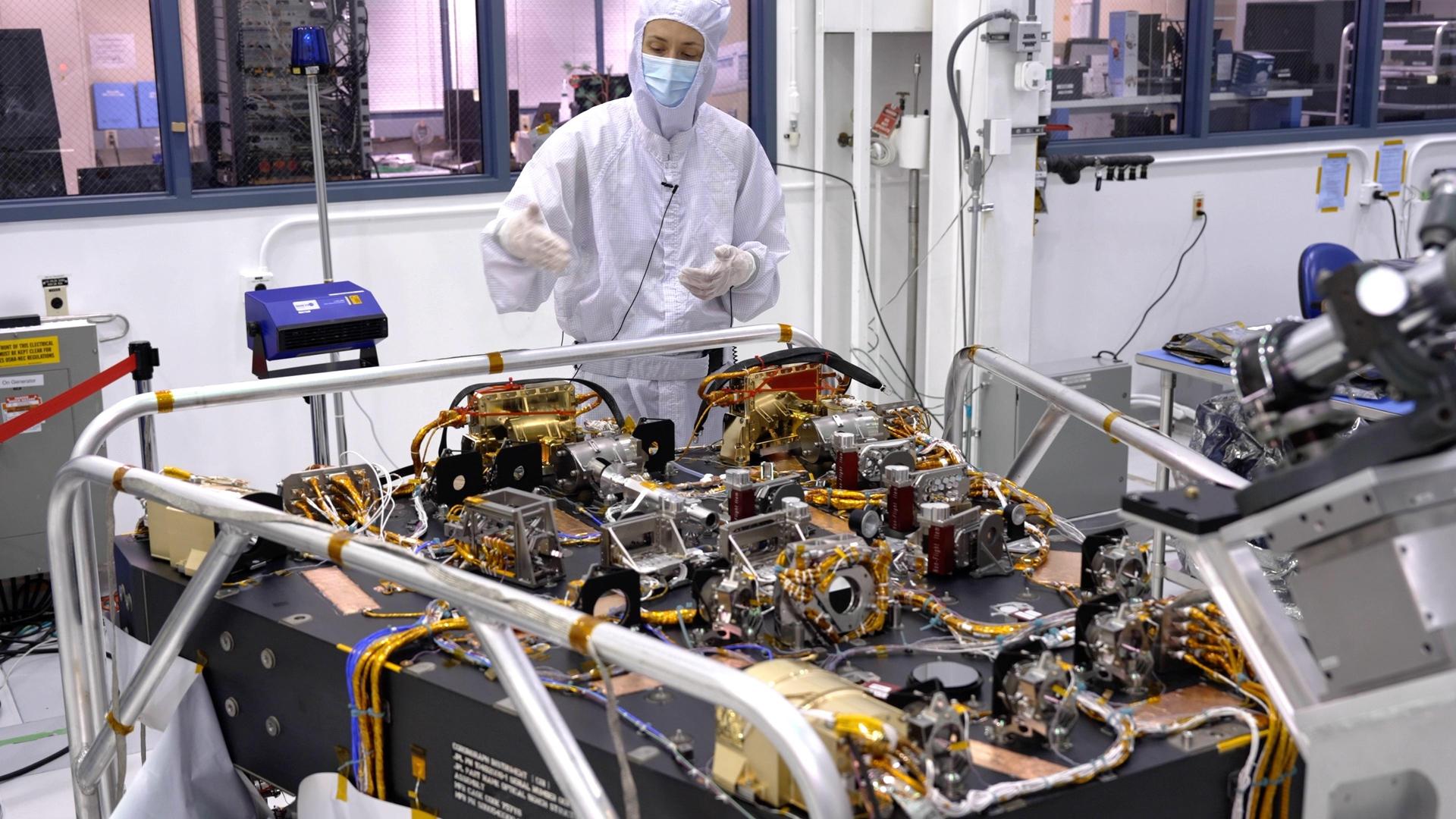
NASA’s Nancy Grace Roman Space Telescope team powered on the mission’s Coronagraph Instrument on 1 September 2026. The turn-on sequence began at 7:27 a.m. EDT and finished at 8:22 a.m., according to the agency’s Roman commissioning blog. The instrument is built to block a star’s glare so faint planets and dusty disks can be photographed in reflected visible light.
This is a power-on and the start of months of calibration, not a first planet photo. Roman launched on 30 August 2026. NASA still expects the observatory’s first public images in early 2027. The Wide Field Instrument — the main survey camera — is scheduled to power on weeks after the coronagraph.
Why it matters
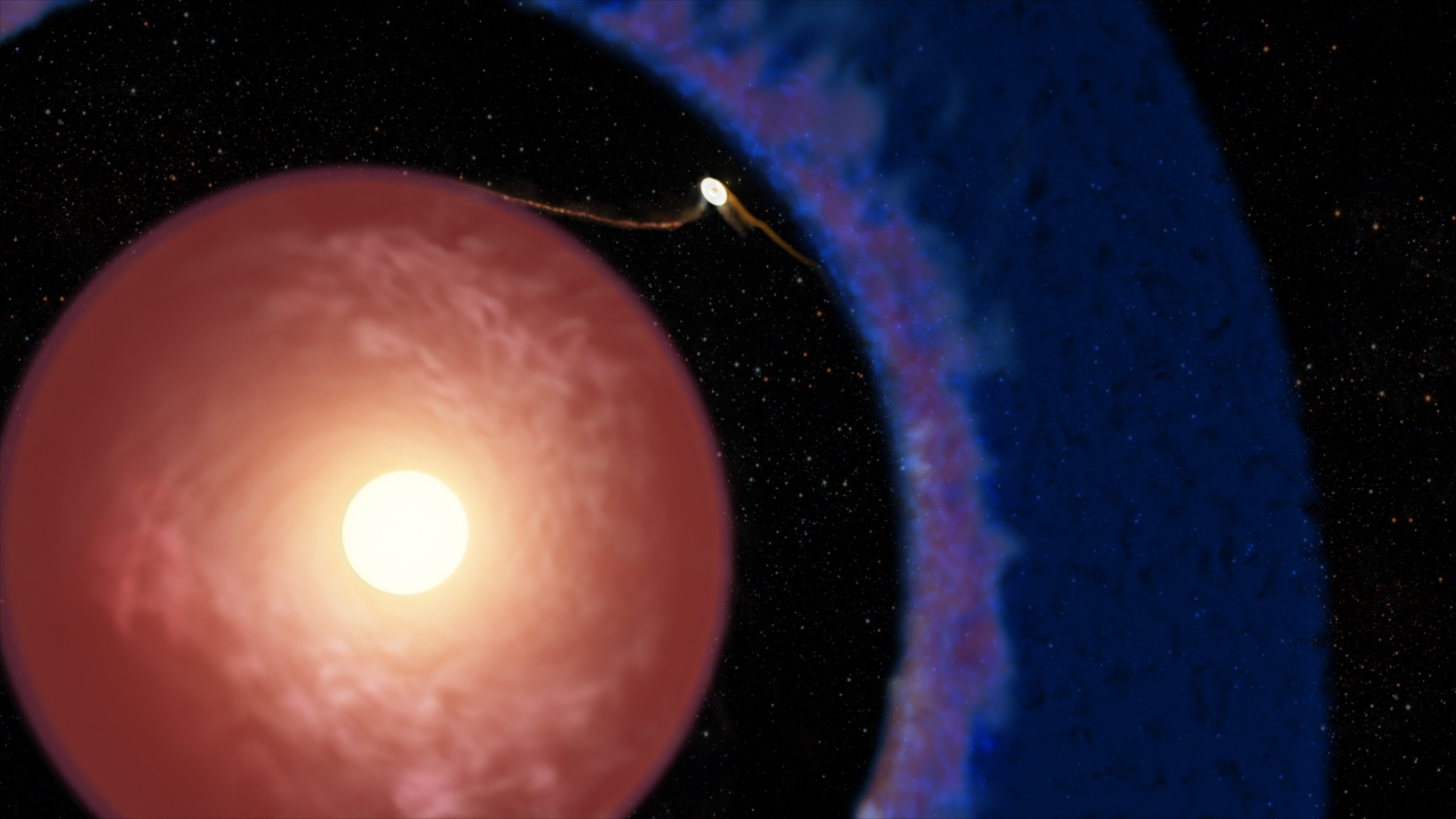
Directly imaging an exoplanet next to its star is one of astronomy’s hardest optical problems. From afar, Earth would look roughly 10 billion times dimmer than the Sun and sit close to that glare. Older space coronagraphs on Hubble and JWST are passive: once they fly, they cannot retune themselves when tiny optical flaws scatter starlight.
Roman’s coronagraph is designed as the first active coronagraph in space. NASA’s Jet Propulsion Laboratory (JPL), which built it, says the system is meant to detect planets about 100 million times fainter than their host stars — roughly 100 to 1,000 times better contrast than existing space-based coronagraphs. That performance targets older, colder giant planets in closer orbits than the hot young worlds ground telescopes usually see.
What NASA learns here feeds the agency’s longer Habitable Worlds Observatory concept, which aims to image Earth-size planets around Sun-like stars. Roman’s coronagraph is a technology demonstration, not that future mission.
What powered on — and what came just before
Commissioning has been a short, public checklist since launch:
| Milestone | When (EDT) | What NASA reported |
|---|---|---|
| Launch (Falcon Heavy, LC-39A) | 30 Aug 2026, 7:26 a.m. | Roman begins ~3-month trip toward Sun–Earth L2 |
| High-gain antenna deploy | 31 Aug 2026, done 2:03 p.m. | ~4 minutes; dish is 5.6 ft across, 24 lb |
| Aperture “visor” / sunshade | 1 Sep 2026, done 6:05 a.m. | ~8 minutes via three spring booms |
| Coronagraph power-on | 1 Sep 2026, 7:27–8:22 a.m. | Instrument online for calibration |
| Wide Field Instrument | “In a couple of weeks” after 1 Sep blog | Still ahead |
| First images | Early 2027 (NASA plan) | Not yet |
The high-gain antenna is sized for the highest data volume of any NASA astrophysics mission so far, NASA says, with downlink rates up to 500 megabits per second to ground stations in New Mexico, Australia, and Japan — needed once the Wide Field Instrument starts flooding the pipeline with infrared survey data across a million miles of space.
How the planet imager works
A coronagraph masks and reshapes starlight so a nearby planet is not drowned out. Roman’s version stacks several firsts for space flight that JPL and Goddard have spent years qualifying on the ground:
- Deformable mirrors that flex in tiny steps to cancel nearly invisible optical errors, including flaws on the primary mirror
- High-contrast masks and wavefront sensing that dig a “dark hole” around the star
- Photon-counting EMCCD detectors built for faint reflected light
- End-to-end observing operations, not just a lab demo
On the ground in thermal-vacuum tests, the instrument team reported raw contrast better than (5 \times 10^{-8}) across two coronagraph architectures — figures from pre-flight papers, not yet repeated on orbit. Flight performance is what commissioning will measure.
NASA’s 1 September blog says the coronagraph team plans a series of pre-planned observations totaling about three months, spread across the mission’s first year and a half of operations. Those runs are meant to prove the hardware and software path for future Earth-like planet imagers, while also returning science on giant planets and dusty disks when the calibrations allow.
Roman will also find planets other ways — microlensing and transits — mainly with the Wide Field Instrument once that camera is online. The coronagraph is the reflected-light, starlight-suppression path.
What this is not
- Not first light science. Power-on means electronics and thermal systems came up. Dark-hole digging, contrast tests, and any planet images come later in commissioning and early operations.
- Not an Earth twin finder yet. Design goal for this demo is roughly Jupiter-like planets in reflected light, about 100 million times fainter than their stars — not the 10-billion-times-fainter Earth case.
- Not the Wide Field Instrument. Cosmology and microlensing surveys wait on WFI power-on and calibration through the rest of the three-month cruise to L2.
- Not a rewrite of the launch story. Roman’s 30 August liftoff was the mission start; this is the first major instrument milestone after antenna and aperture-cover deployments.
What to watch next
- Wide Field Instrument power-on — NASA’s 1 September antenna/visor post said “in a couple of weeks.”
- Coronagraph calibration results — whether on-orbit contrast approaches the pre-flight (5 \times 10^{-8}) class numbers.
- Arrival and survey ops near L2 — end of the ~three-month commissioning cruise.
- First image release — NASA’s stated target remains early 2027.
If those steps hold, Roman becomes the first space telescope to fly an active, adaptive coronagraph as a pathfinder for the next generation of planet cameras — and a survey machine that can map dark energy and exoplanets at a scale no previous NASA astrophysics mission has downlinked.
Sources
- NASA Science Roman blog, 1 Sep 2026: NASA Roman’s Planet Imager Has Powered On
- NASA Science Roman blog, 1 Sep 2026: NASA Roman Space Telescope’s Antenna, ‘Visor’ Deployed
- NASA: Igniting Roman’s Journey (launch 30 Aug 2026, 7:26 a.m. EDT)
- NASA JPL: The Roman Coronagraph Instrument (100 million× fainter; 100–1,000× better than prior space coronagraphs; first active coronagraph)
- Roman docs / IPAC: Key Technologies — Coronagraph