On 8 September 2026, NASA announced the first study to put Hubble and the James Webb Space Telescope on the same patch of sky to hunt Trans-Neptunian Objects — the faint icy bodies that orbit the Sun beyond Neptune. Two teams published complementary papers that day in The Astronomical Journal. Together they analyzed 27 newly discovered tiny, dim TNOs. Webb found objects so faint that one is compared to spotting a small swarm of fireflies on the Moon from Earth. The smallest measured body is about 3 miles (5 kilometers) across — roughly five times smaller than what the most sensitive ground-based telescopes can detect.
This is not a new planet announcement and not a spacecraft flyby of the Kuiper Belt. Even with Hubble and Webb, these objects appear only as points of light. The news is what those points reveal about how planets start: fewer small leftovers than some models expected, and surfaces that still “remember” how they formed.
Why it matters
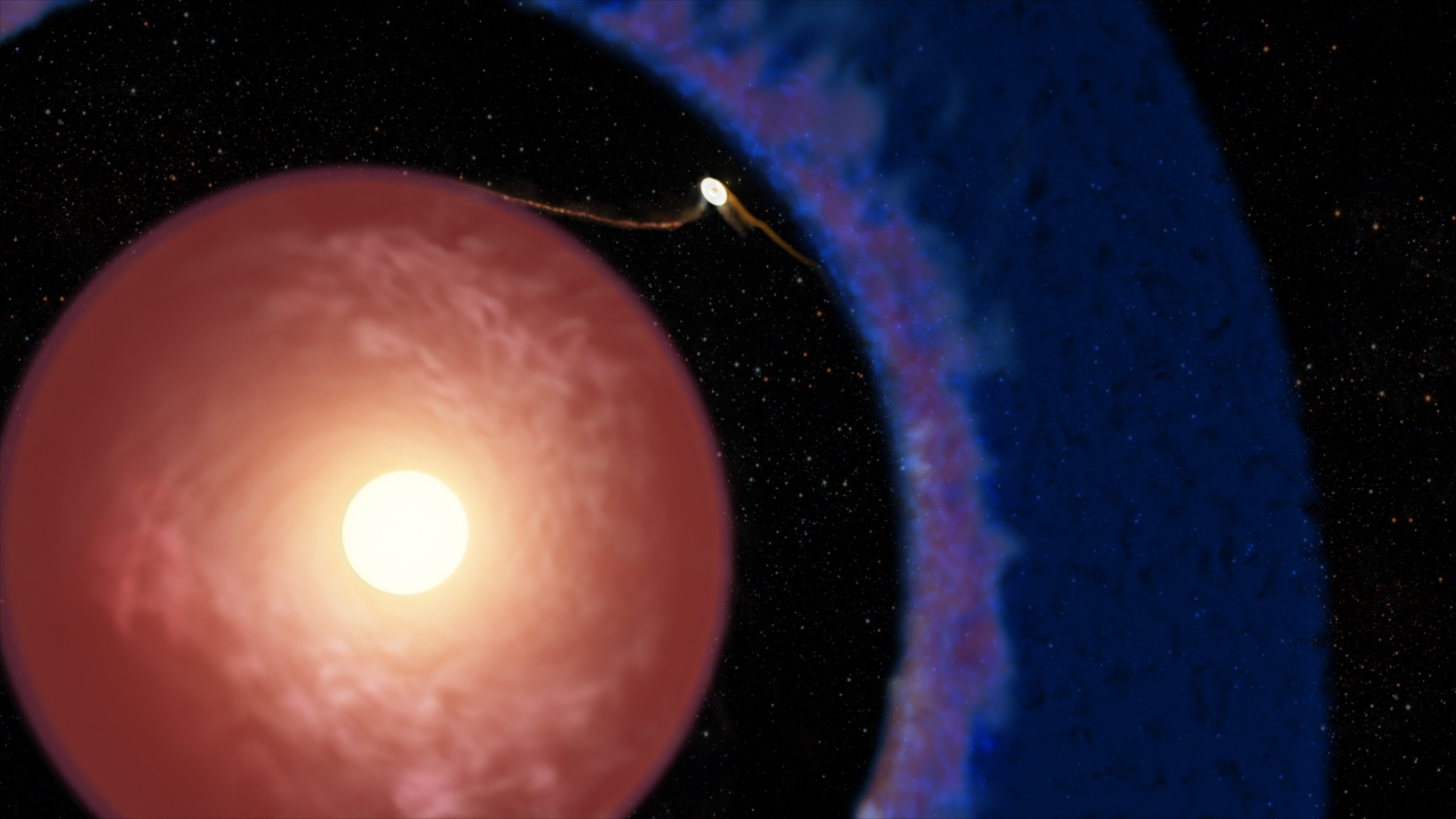
Beyond Neptune, the second stage of planet assembly never finished. Dust and pebbles grew into city-sized planetesimals — the solid building blocks that clump into planets — but did not merge into full-sized worlds. That frozen population is the closest solar-system archive of early planet-building still sitting in the sky.
Until now, the smallest TNOs were mostly out of reach. Ground telescopes struggle below a size floor that Hubble and Webb have now pushed lower. Seeing 27 new members in one coordinated survey, and measuring both visible colors (Hubble) and infrared light (Webb), lets astronomers test two long-standing questions at once: how many small planetesimals formed, and whether collisions later scrubbed the chemical fingerprints of birth.
The answer on colors is the surprise NASA led with. Dynamically “cold” TNOs still ride near-circular orbits in the plane of the solar system. Dynamically “hot” TNOs were shoved outward when the giant planets migrated early on; they sit on highly elliptical paths that leave the plane. Astronomers expected collisions to rewrite the surfaces of the smallest bodies in both groups. Instead, the tiny TNOs keep the same color relationships as their larger family members — they look like their siblings, not like reshuffled rubble.
Key numbers
| Fact | Value |
|---|---|
| NASA release date | 8 September 2026 |
| Journals / papers | The Astronomical Journal — Eduardo et al. 10.3847/1538-3881/ae907f; Morgan et al. 10.3847/1538-3881/ae9084 |
| New TNOs analyzed | 27 newly discovered tiny, dim objects |
| Smallest diameter observed | ~3 miles / 5 km |
| vs best ground telescopes | ~5× smaller |
| Faintness metaphor (NASA) | like seeing a small swarm of fireflies on the Moon from Earth |
| Populations compared | dynamically cold vs hot TNOs |
| Size distributions | surprisingly similar for both populations |
| Lead institutions | University of Victoria (Marielle Eduardo); Northern Arizona University (Anastasia Morgan); NRC Canada guidance |
How they did it
In the deepest TNO survey to date, PhD-led teams from the University of Victoria in Canada, under guidance from the National Research Council of Canada, and Northern Arizona University in Flagstaff watched the same sky patch with both telescopes at once. Hubble recorded visible light; Webb recorded infrared. From those joint data the researchers measured colors — a fingerprint of surface composition — sizes, and orbits.
Marielle Eduardo of the University of Victoria led the size-distribution analysis. She notes that planetesimal formation produced the same distribution of sizes for both cold and hot populations even though they formed in different regions of the early disk. The process looks insensitive to whether that disk was hot or cold, dense or fluffy.
Anastasia Morgan of Northern Arizona University led the color and composition study. “You could imagine a scenario where getting knocked around and fragmented would change the surface composition,” she said in the NASA release, “and then you would see a different surface color for tiny TNOs compared to their larger siblings. So it's really fascinating to see that the smallest objects are somehow 'remembering' and preserving the history of how they were made.”
Co-author David Trilling of Northern Arizona University added that the dynamically hot TNOs still retain a signature of where they were born, even after their orbits were scrambled. Both populations appear to keep colors close to those they had at formation, with little change since the birth of the solar system.
Webb’s infrared sensitivity also let the teams count objects by size. They found fewer of the very small bodies than some planet-formation models expected — a constraint that future simulations of the outer disk will have to respect. NASA is clear that neither telescope alone could have done this: Hubble’s visible-light sensitivity and Webb’s infrared reach together give more insight than either observatory on its own.
What this is not
- Not new planets. These are small icy leftovers, not newly named worlds competing with Pluto or Earth.
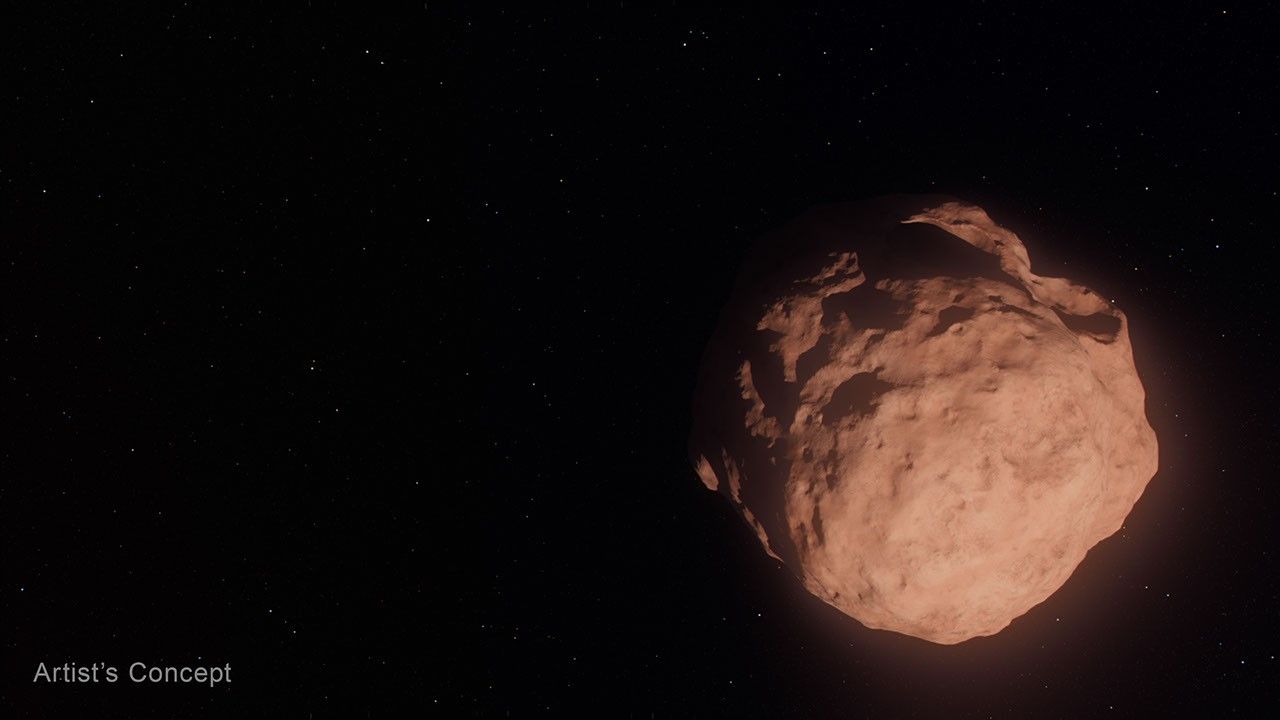
- Not resolved surfaces. The cover art is an artist’s concept. In the data, each TNO is a point of light; no spacecraft imaged craters or ice fields here.
- Not a Kuiper Belt flyby mission. There is no New Horizons–style encounter in this release — only remote sensing from Earth orbit.
- Not proof that collisions never happen. The teams say collisions may be rarer than expected, or that TNOs somehow retain primordial compositions even after impacts. The mystery is open.
- Not a claim that hot and cold TNOs formed in identical places. Hot objects were migrated; cold ones stayed. The surprise is that their size distributions still look similar and that colors still match family patterns.
What to watch
- Follow-up spectra. Earlier Webb work already took high-quality spectra of dozens of larger TNOs. Pushing the same chemistry toolkit to the new 5-kilometer class would test whether “remembering” holds molecule by molecule.
- Collision models. If small TNOs are rarer than expected and still look primordial, disk and cascade models need a rewrite — fewer smash-ups, gentler smash-ups, or both.
- Roman and other wide surveys. NASA’s Nancy Grace Roman Space Telescope and future deep surveys can expand the census beyond this single coordinated field and check whether the 27-object sample is typical.
- Hot vs cold orbits. More precise orbits for the faintest discoveries will sharpen the split between pristine cold-belt members and migrated hot ones — and show whether any color outliers appear once the sample grows.
For now the concrete news is enough: Hubble and Webb, working together for the first time on TNOs, found 27 new icy leftovers past Neptune, including worlds as small as about 5 kilometers, and those tiny bodies still carry the color memory of how the solar system’s building blocks were made.
Sources
- NASA Science, “NASA’s Hubble, Webb Find Far-out Solar System Objects ‘Remember’ Past,” 8 September 2026 — https://science.nasa.gov/missions/hubble/nasas-hubble-webb-find-far-out-solar-system-objects-remember-past/
- Eduardo et al., The Astronomical Journal, 8 September 2026 — DOI 10.3847/1538-3881/ae907f
- Morgan et al., The Astronomical Journal, 8 September 2026 — DOI 10.3847/1538-3881/ae9084
- Cover credit: NASA, ESA, Leah Hustak (STScI) — artist’s concept of a Trans-Neptunian Object (points of light only in real data)